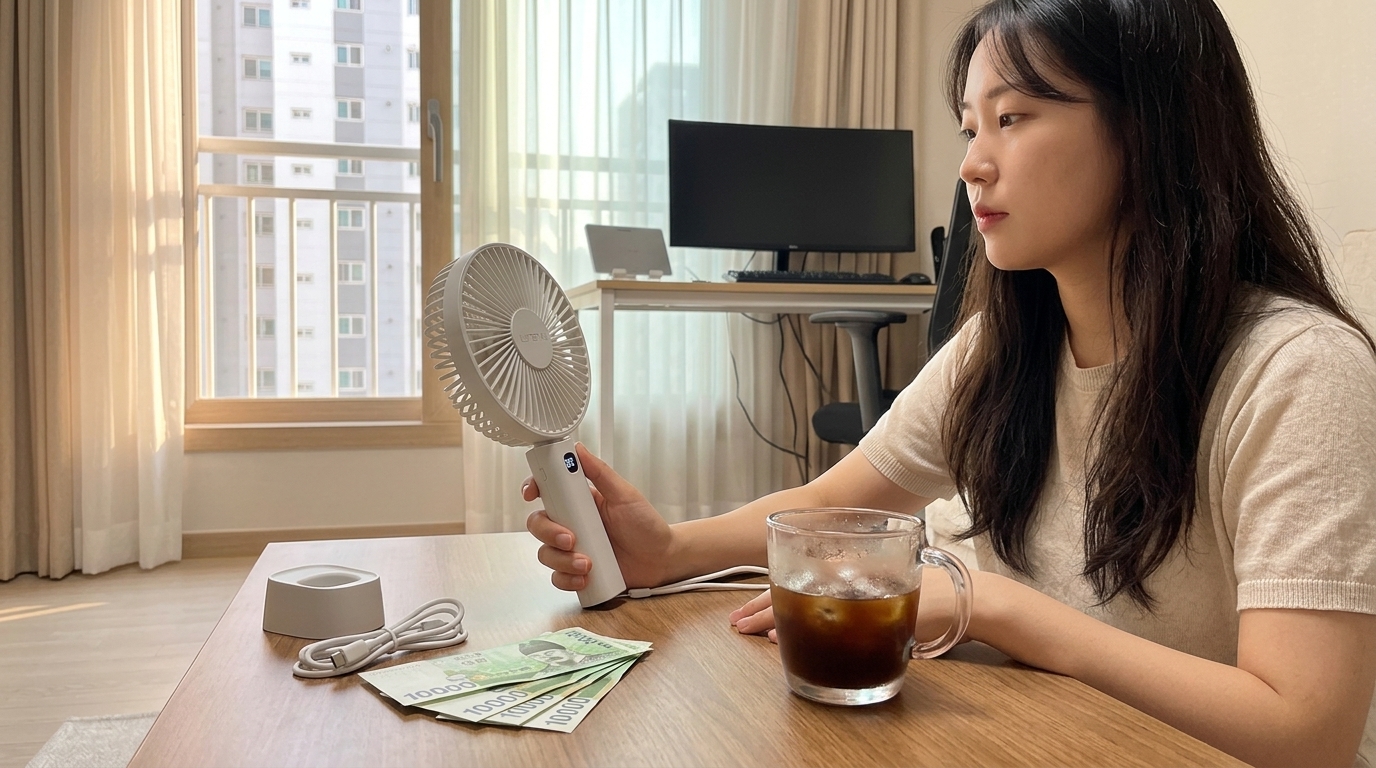
You walk in after work, hit the AC, and instead of cool air you get a blast of wet gym towel. And it's not one of those smells you stop noticing — it creeps up a little more every day. The good news: the cause is almost always the same one thing, and there's a fix you can start tonight for free.
- Nine times out of ten it's moisture — the coil inside is soaking wet right after cooling, and mold and bacteria move in
- Do this one thing today: run fan-only mode for 30 minutes before you shut it off — it costs a fraction of a penny
- Add a filter wash every two weeks and the smell doesn't come back
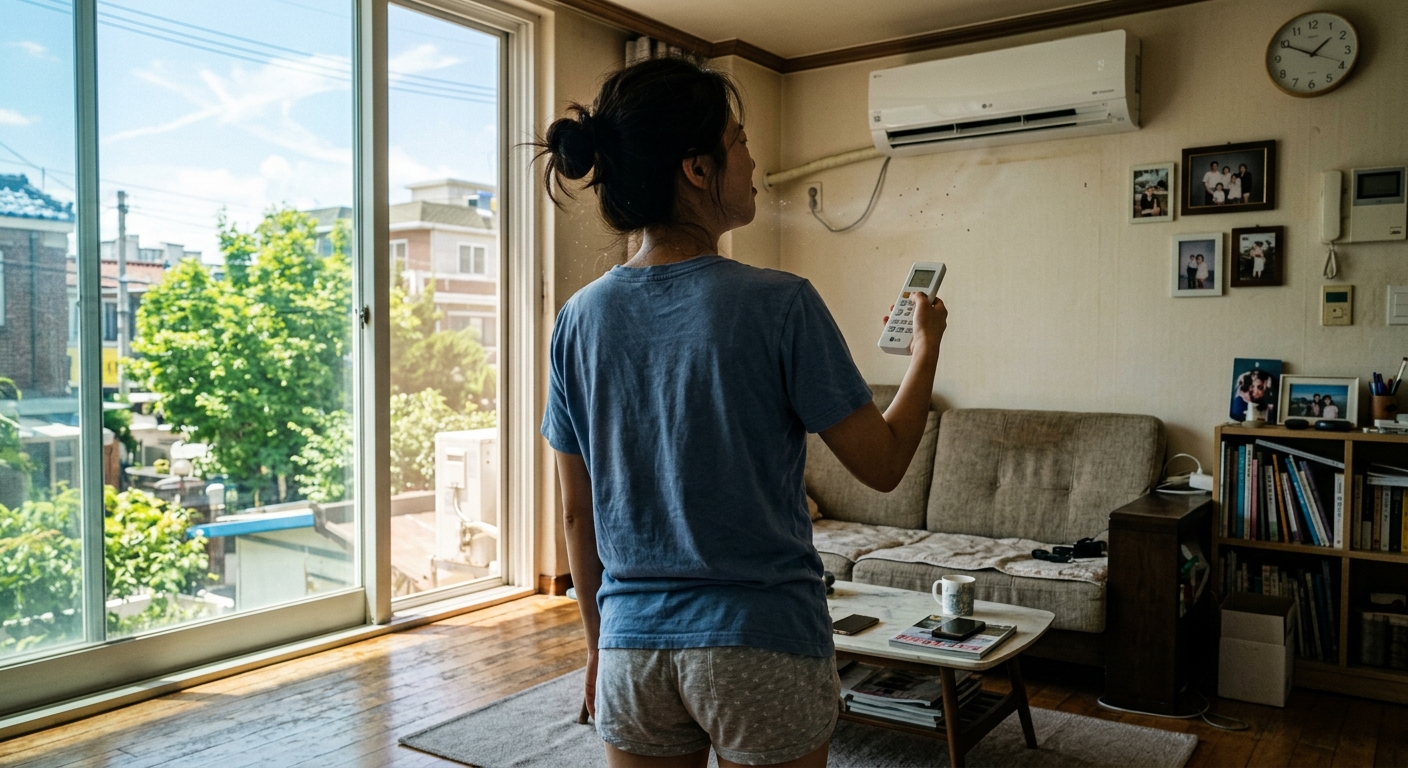
What that smell actually is
While your AC is cooling, the evaporator coil inside is beaded with condensation like a cold beer glass. The problem is the moment you turn it off. Those soaked parts get sealed inside a dark plastic housing and sit there all night without ever drying out.
Dark, damp, and warm — that's the trifecta mold lives for. Flip the unit on the next day and everything that grew overnight rides the airflow straight into the room. That's the smell.
Which means the whole fix boils down to one sentence: dry the inside out before you shut it off.
You can diagnose it by smell alone
| Smell | Cause | What to do |
|---|---|---|
| Musty, mildewy, damp-basement | Mold and bacteria feeding on trapped moisture | Fan-only dry cycle + filter wash (easy DIY) |
| Sour, dirty-mop, standing-water | Condensate that isn't draining — clogged line or pan | Check the drain pan and line; call a tech if it persists |
| Acrid, burning, hot-plastic | Electrical or motor trouble | Shut it off at the breaker and call an HVAC pro — do not DIY this one |
Anything but the burning smell, you can almost certainly handle yourself. Work through the steps below in order.
The five-minute fix that works starting tonight: fan-only drying
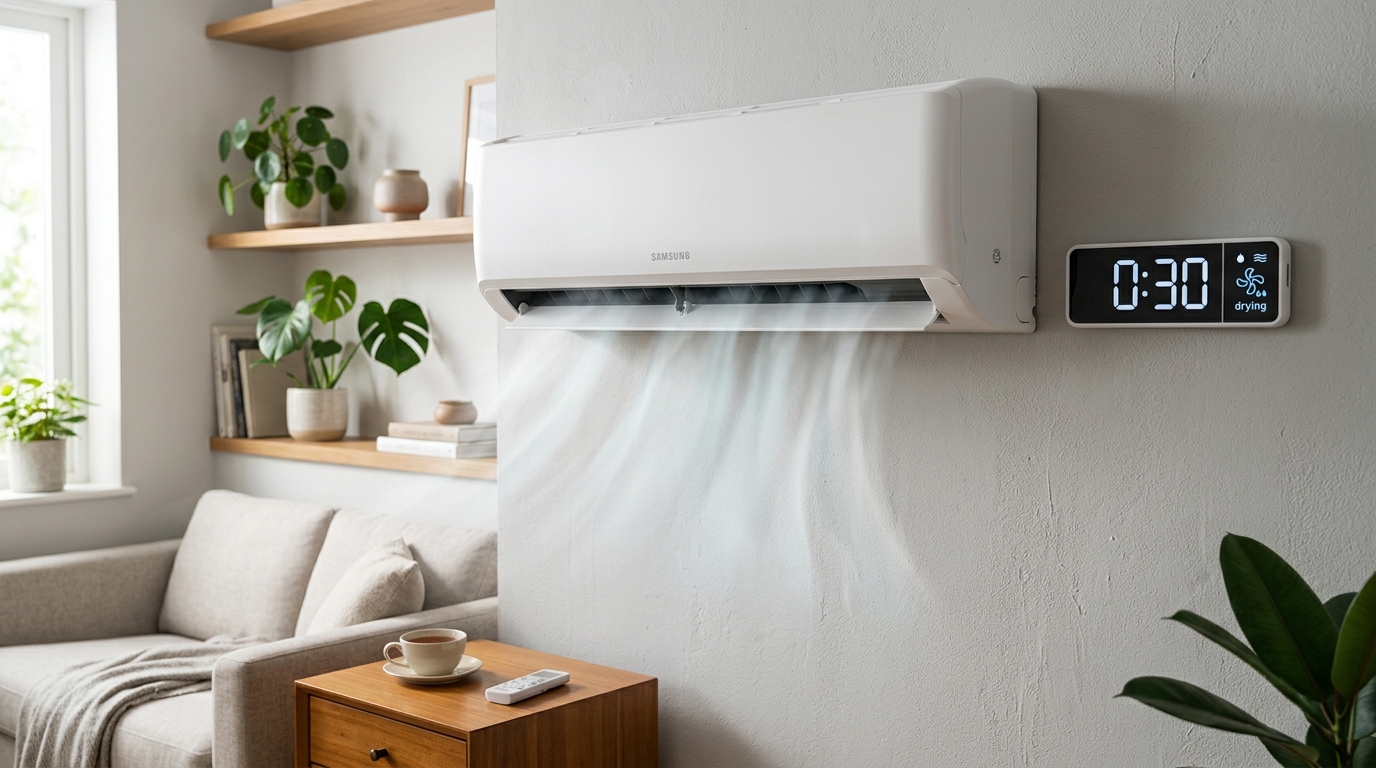
The method is almost disappointingly simple. Before you turn the AC off, switch it to fan-only mode for 30 minutes. Moving air dries out the wet coil so mold never gets its overnight window.
- Ten to thirty minutes before you're done cooling, switch the mode from Cool to Fan (some remotes label it Fan Only or show a little propeller icon)
- You don't need to touch the temperature — in fan mode the compressor isn't running, so you're pulling about as much power as a box fan on low (20–30 watts)
- Thirty minutes of that costs well under a penny. Compare that to a professional coil cleaning at $150–$400 and it's basically free insurance
If your unit was made in the last few years, look for a Dry, Self Clean, Auto Clean, or Clean Fan setting — same job, done automatically. If you've had it all along and never turned it on, tonight's the night.
How to get rid of a smell that's already there
If the funk has already set in, drying alone won't cut it. Two more steps, in this order.
1. Wash the filter. Pop the front cover, pull the filter out, and rinse it under lukewarm water. If it's caked with dust, use a drop of mild dish soap and a soft brush, then let it dry completely in the shade before it goes back in. A filter that's still damp becomes the next source of the smell. During cooling season, every two weeks is the target.
2. Windows open, max cool, ten minutes. Throw the windows wide open, set the unit to its lowest temperature and highest fan speed, and let it run for ten minutes. The idea is to flush the smell particles out along with the condensation instead of recirculating them. Follow it with 30 minutes of fan-only and most musty smells drop off noticeably.
If neither one touches it, the mold has worked its way deeper into the coil or blower wheel. At that point, skip the aerosol "AC cleaner" cans and call someone who does a full teardown cleaning — spray residue left sitting on the fins has a real habit of making both the corrosion and the smell worse.
Cleaning the filter: five minutes if you go in this order
Every two weeks sounds easy until you're standing in front of the unit wondering which piece comes off first. Here's the sequence for a wall-mounted mini-split.
- 1. Kill the power first. Turning it off with the remote is not the same as cutting power. You're about to use water — unplug it or flip the breaker.
- 2. Open the front cover and slide the filter out. On most units the tabs release with your fingers. Dust will rain down, so lay a towel or some newspaper underneath.
- 3. Lukewarm water and mild soap. Hot water warps the mesh. Brush gently, following the grain.
- 4. Dry it in the shade, fully. Direct sun makes the frame curl so it no longer seats tightly. And a filter you reinstall half-damp because you were in a hurry is just a fresh start for the mold.
- 5. Reinstall only when bone dry. It shouldn't feel cool or clammy to the touch.
If you can see the dust from across the room, don't wait for the two-week mark. A clogged filter doesn't just smell — it drags your cooling efficiency down with it.
If you have an auto-dry setting, use it
Most units from the last few model years include something called Auto Clean, Self Clean, Dry, or Internal Dry. Turn off cooling and the fan keeps running on its own for a while before the unit fully shuts down.
Since remembering to hit the fan button every single night is exactly the kind of thing nobody actually does, turn this on if you have it. It's usually buried in the remote's settings or options menu — search the manual for the word "dry" and start there.
On an older unit without it, you can fake it: set a sleep timer or shutoff timer for bedtime and switch to fan mode for the 30 minutes leading up to it.
Window units, portables, and central air are a little different
With a wall-mounted mini-split you just pull the filter and wash it. Other setups put different parts in reach.
- Window units — the filter usually slides out of the front grille. Also check that the unit is tilted slightly toward the outside so condensate actually drains instead of pooling in the base pan.
- Portable units — water left sitting in the condensate tank is a smell source all by itself. Empty it as soon as you're done running the unit, and let the exhaust hose dry out.
- Central air — swap the return filter every 1–3 months. A musty blast from the vents when the system first kicks on (HVAC techs call it "dirty sock syndrome") usually points to the evaporator coil or a slimy drain pan up in the air handler, which is a service call, not a DIY job.
- Ceiling cassettes — the filter is hard to reach and there's a separate condensate pump. If you're smelling sour standing water, get a tech out rather than poking at it.
Doesn't running the fan for 30 minutes add to my electric bill?
Barely. In fan mode the compressor never cycles on, so you're using box-fan-level power — we're talking a fraction of a cent. Set that against the cost of a professional coil cleaning once mold has taken hold and it isn't a close call.
Can I clean it with vinegar or baking soda?
On the filter, sure. Spraying either one into the coil, no — acid on aluminum fins and copper tubing invites corrosion, and leftover residue can end up smelling worse than what you started with.
My AC is brand new and it still smells
Age has nothing to do with it. A new unit gets just as wet inside after a cooling cycle as a ten-year-old one. Skip the drying step and a brand-new AC can start smelling within a single season.
It's been days and the smell won't go away
If you've done the fan-only dry cycle and washed the filter two days running with no change, the problem is deeper in the coil or on the blower wheel. That's the point to start pricing out a real teardown cleaning.
How to have a smell-free AC next summer
It comes down to three habits: 30 minutes of fan-only before shutdown (daily) · wash the filter (every two weeks) · one long fan-only dry cycle at end of season (once a year). That last one matters more than people expect — run the AC one last time in September, shut it off wet, and the first blast next June will be a year of mildew hitting you all at once.
Tonight, before you turn it off, go find the fan button on your remote. A half-cent habit changes what next summer's first breath of cold air smells like.