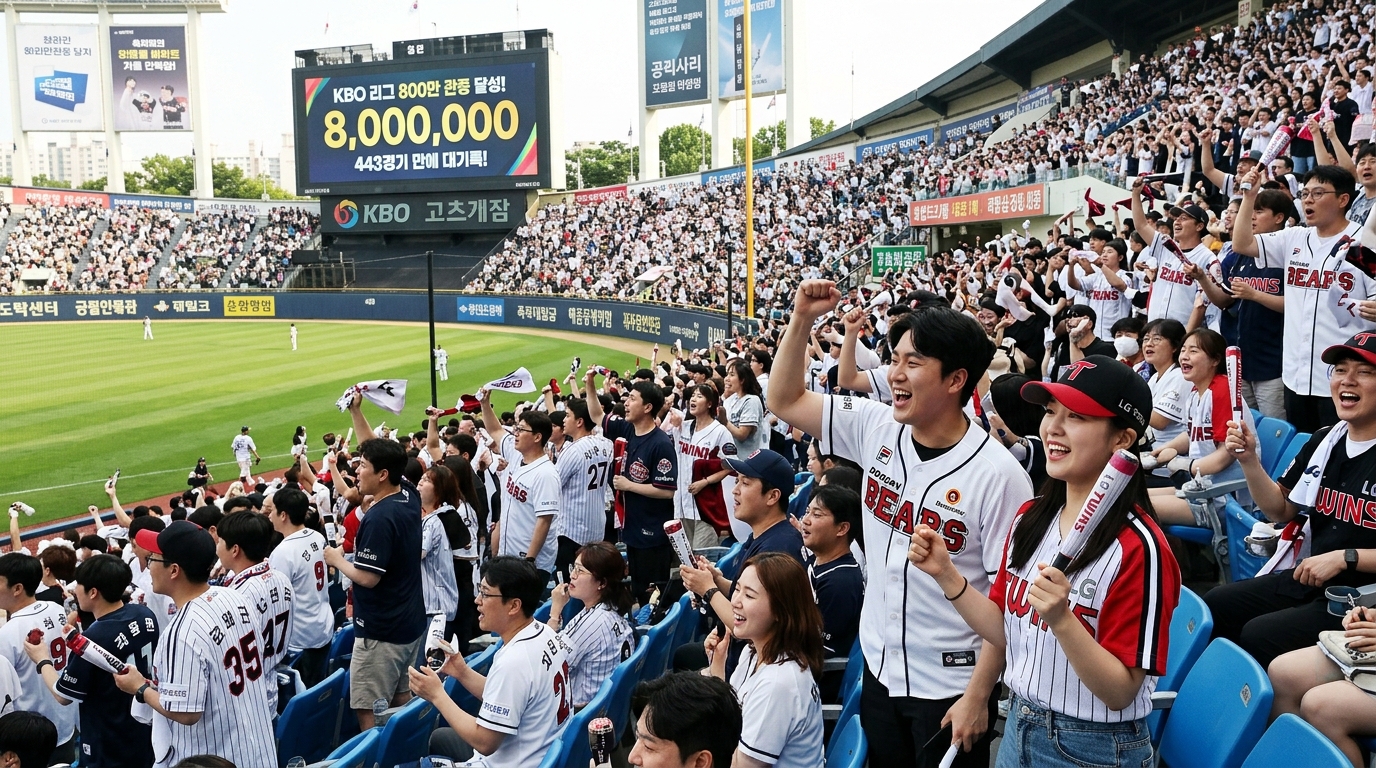
Ever get shut out of a ticket and end up watching the stream instead? If that's happened to you more than once this year, it isn't bad luck. The KBO — Korea Baseball Organization, the country's 10-team pro league — just blew past 8 million fans in 443 games.
That's 22 games faster than the previous record. So I pulled out a calculator and figured out where this pace lands by the end of the season.
- Cumulative attendance at the milestone: 8,007,967 fans in 443 games (figures as of July 19).
- The old "fewest games to 8 million" mark was 465 games, set just last season. This year shaved 22 games off it.
- Average crowd: 18,077 per game — nearly 1,000 more than last season's final average of 17,101.
Just how fast is 443 games, really?
Raw numbers don't land until you compare them. Last season the league reached 8 million in 465 games, and at the time that was the fastest anyone had ever done it. One year later, it's 22 games quicker.
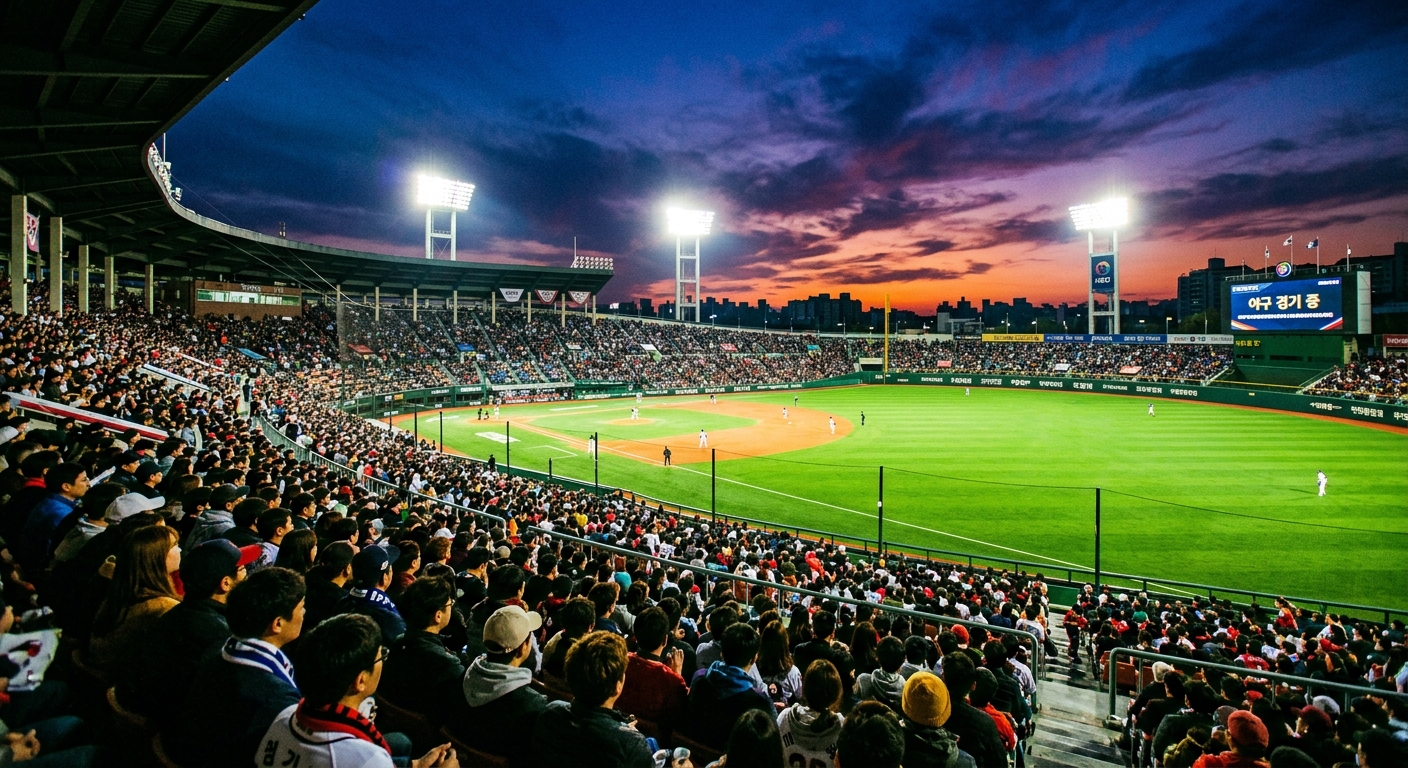
The split times are the fun part. Going from 7 million to 8 million took 55 games. Last season that same stretch took 60.
Usually midseason is when the buzz cools off a little. This year it did the opposite — the league sped up as it went.
Here's a detail that got less attention: according to Korean broadcaster MBC, this season hit every single milestone — 1 million, 2 million, all the way to 8 million — in record time. This wasn't an Opening Day bump that faded. It's been like this since the first pitch.
The 8 million mark fell at a Kiwoom Heroes–Hanwha Eagles game at Hanwha Life Ball Park in Daejeon. Roughly 95,000 fans packed five ballparks around the country that day, and somewhere in one of those turnstile lines was fan number 8,000,000.
So where does this season actually finish?
I couldn't help myself, so I did the arithmetic. The regular season is 144 games per team, 720 league-wide. The 8 million mark came at game 443, which leaves 277 games on the schedule.
To top last season's final total of 12,312,519, the league needs 4,304,552 more fans through the gates. Divide that by 277 games and you get about 15,540 per game.
Sounds like a tall order? It isn't. This year's average is already 18,077. Attendance could drop off noticeably from here and the record still falls.
If the current pace simply holds, the 720-game total comes out somewhere in the 13-million range. That's back-of-the-envelope math, obviously — weather, pennant races, and rainouts all get a vote. But the direction is pretty unmistakable.
| Metric | Last season (final, 720 games) | This season (443 games, as of July 19) |
|---|---|---|
| Games needed to reach 8 million | 465 | 443 |
| Average attendance per game | 17,101 | 18,077 |
| Sellouts | 331 games | 241 games |
| Seat occupancy | 82.9% | 87.4% |
The left column is a finished season. The right column is barely past the halfway point. And the average crowd and fill rate are already ahead.
The ticket squeeze shows up in the data
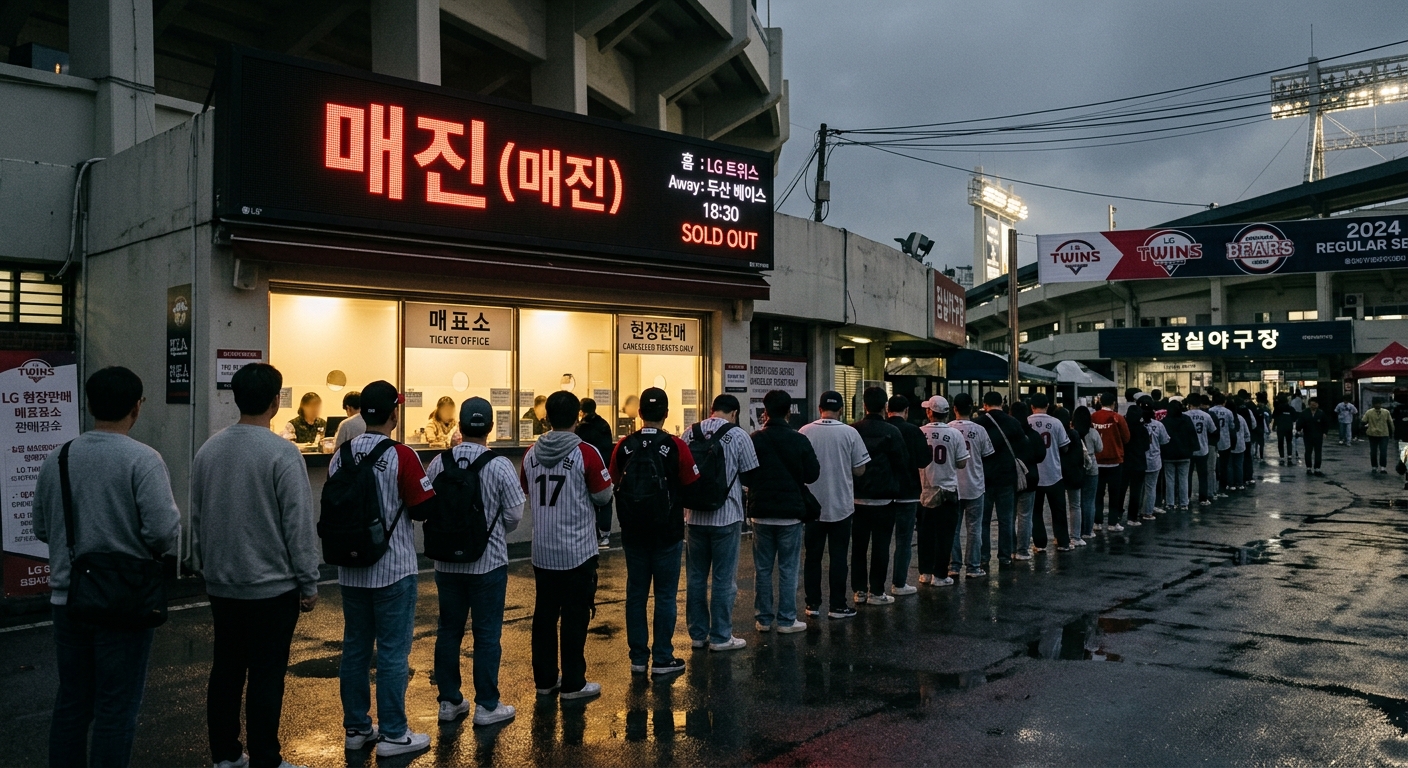
Where the vibe becomes a statistic is the sellout rate. Of 443 games, 241 sold out — better than one in every two, about 54%.
Last season it was 331 sellouts in 720 games, roughly 46%. Every baseball fan I know has been complaining that there are no tickets. Turns out they have a point.
One thing worth untangling: seat occupancy and total attendance are not the same number. The occupancy leader this season is the Samsung Lions at 99.2%, but the leader in total home attendance is the LG Twins (1,096,881). Ballpark capacities differ, so the two lists don't match.
Occupancy tells you how full a building gets; total attendance tells you how many bodies came. Mix them up and you'll reach some strange conclusions. For reference, the league-wide occupancy is 87.4%, with LG and Hanwha both sitting at 98.3% — fill rates most American ballclubs would take in a heartbeat.
The sellout crown is a three-way tie: LG, Hanwha, and Samsung with 36 apiece. That's more than 100 sold-out nights across just three home parks.
Where does your team land? The club-by-club breakdown
What everyone really wants is their own team's line. Here's how it looked as of that same July 19 count.
- Total home attendance — LG Twins 1,096,881; Samsung Lions 1,048,271; Doosan Bears 903,718; SSG Landers 814,818
- Average per game — LG 23,338; Samsung 23,295; Doosan 21,017; Lotte Giants 20,221
- Year-over-year growth — the NC Dinos lead at 25% (564,312 fans), with KT Wiz and Kiwoom Heroes both up 16%
Growth is the column I'd actually watch. The total-attendance leaderboard is the usual suspects in the usual order. Rank the clubs by "how many more came than last year" and the whole list reshuffles.
NC's 25% means that where ten people used to sit, there are now twelve or thirteen. If your home park has felt different lately, that feeling has a number attached to it.
First-half attendance finished at 7,633,775 — the biggest first half in league history. The second half opened July 16, so the 8 million headline arrived practically the moment the doors reopened.
277 games left: what to watch for
Quick caveat first. Every figure here comes from reporting as of July 19. More games have been played since, so the running total is higher than what you see above.
What's left is 277 games and a wall labeled 12.31 million. As the math showed, 15,540 fans per game clears it. At this point the question isn't whether the record falls — it's by how much.
If you do one thing today, make it this: pick the home date you actually want, then look up when that club drops its tickets. In a league selling out more than half its games, the winning move isn't hunting for seats, it's setting an alert before they go on sale. Each club uses its own ticketing platform and its own release schedule, so check the team's site or app before you plan around it. And if you're buying from the States for a trip, sort out payment and any ID requirements early — foreign cards don't always sail through Korean checkout pages.
A few years from now, when somebody brings up the 8 million season, the number 443 is going to come with it. Getting to watch that one live is a pretty good deal.