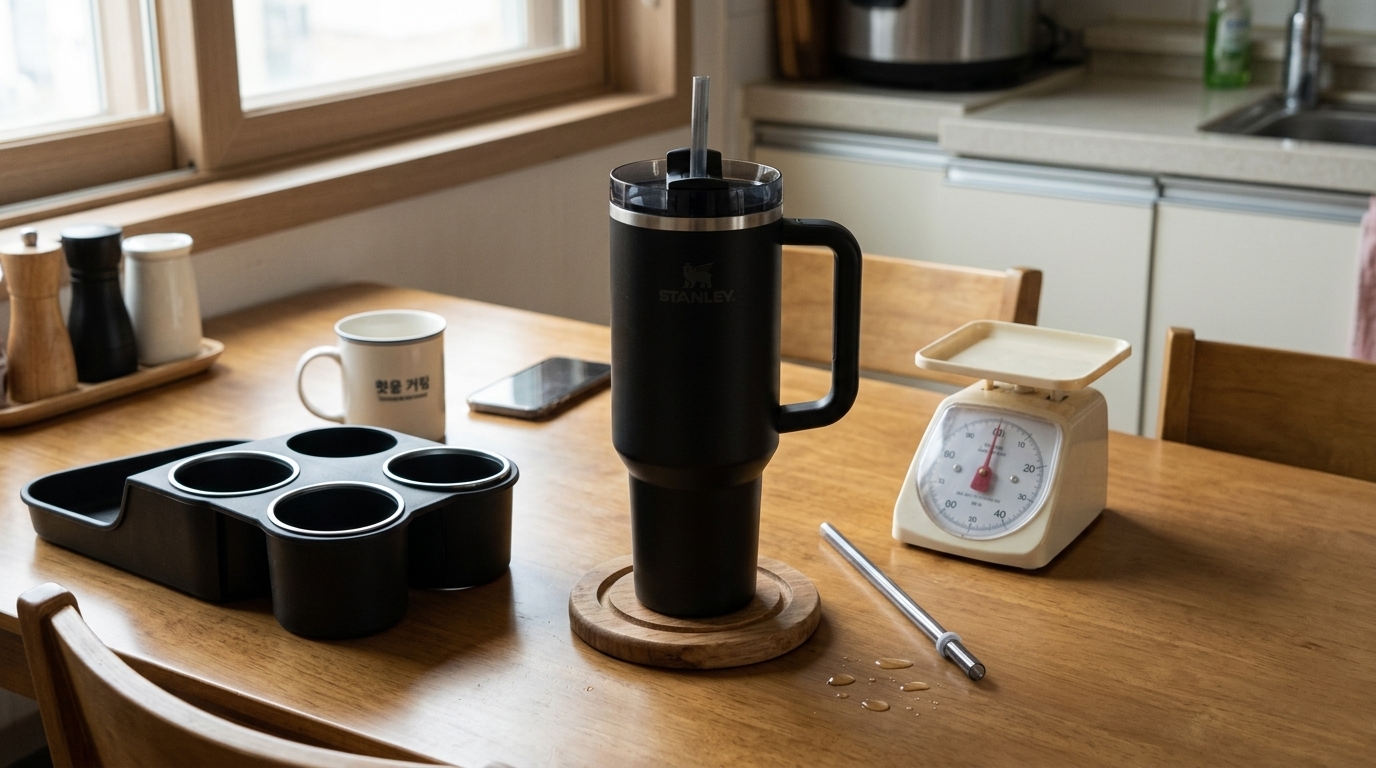
The scale has said roughly the same thing for three years, but every time I sit down there's a roll folding over my belt. Here's the thing: abdominal obesity is diagnosed with a tape measure, not a bathroom scale. Your weight can sit perfectly still while your waist quietly creeps up. Let's get into why the belly is the last thing to go, and what two weeks of small changes can actually move on the tape.
- The cutoff for abdominal obesity is a waist over 40 inches (102 cm) for men and 35 inches (88 cm) for women. You can hit it at a completely normal body weight.
- The real problem isn't the belly you can pinch — it's the visceral fat behind the muscle wall. That's the on-ramp to type 2 diabetes, high blood pressure, and bad cholesterol numbers.
- Slashing carbs to near zero burns through muscle first, which is exactly why so many people end up heavier a few months later.
Normal weight, growing gut — so what do you actually measure?
Pull out a tape measure and the number is usually a gut punch. Waist circumference isn't your pants size. You measure the midpoint between the bottom of your lowest rib and the top of your hip bone (the iliac crest), which for most people lands a little above the navel.
Under the standard US criteria (NHLBI/ATP III, the same ones your doctor uses for metabolic syndrome), anything over 40 inches for men or 35 inches for women counts as abdominal obesity. Worth knowing: for people of East and South Asian ancestry, guidelines use noticeably lower cutoffs — roughly 35 inches (90 cm) for men and 31.5–33.5 inches (80–85 cm) for women — because the health risk shows up at a smaller waist.
And no, buying 34s at the store does not get you off the hook. Jeans sit below the belly, and American vanity sizing does the rest, so a labeled waist typically runs 3 to 5 inches smaller than the real thing. Size 34 pants with a 38-inch measured waist is completely routine.
This is also where "skinny fat" gets caught — thin arms and legs, normal BMI, but low muscle mass and a high body fat percentage with most of it parked in the middle. Researchers sometimes call it TOFI: thin outside, fat inside.
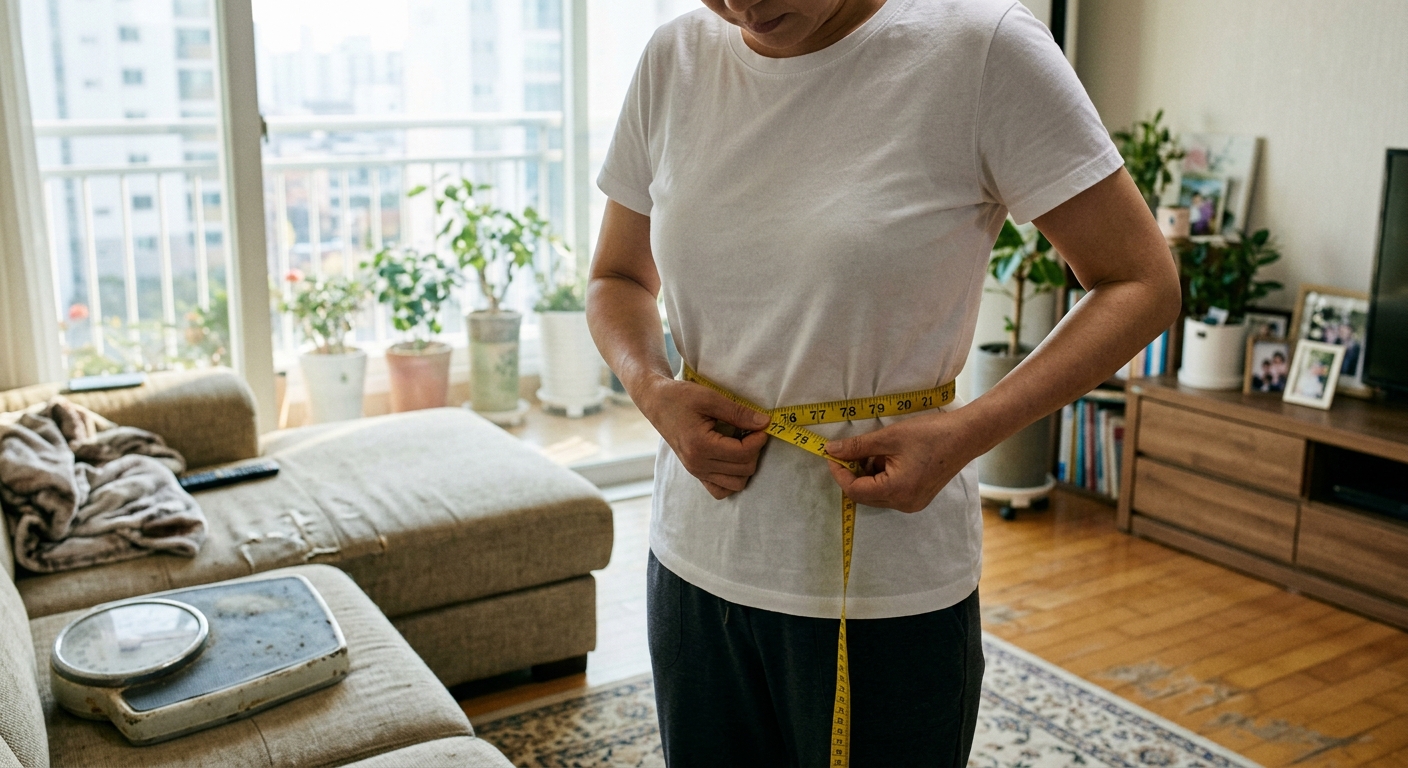
The most recent CDC survey data puts adult obesity in the US at roughly 40% by BMI. Measure by waist instead and the picture gets worse, not better — more than half of American adults exceed the abdominal obesity cutoff, including a lot of people whose BMI looks fine on paper.
So this isn't a fringe problem. It's most of the room.
"It's not a belly problem, it's a blood vessel problem" — what that means
Fat doesn't just pile up wherever. It goes under the skin first, and once that storage is full it starts pushing in between your organs. That's visceral fat.
Doctors measure it by area on an abdominal CT scan, and clinical guidelines generally treat more than 100 cm² as a high-risk threshold. Same fat, far nastier behavior — because visceral fat isn't a passive storage unit. It's metabolically active tissue that pumps out inflammatory signals like a rogue endocrine organ.
As it builds, insulin stops doing its job properly. That's insulin resistance. Triglycerides climb, HDL — the good cholesterol — drops, and after a few years of that you tend to collect diabetes, hypertension, and dyslipidemia as a set.
That's the whole point of the line about it being a vascular problem rather than a cosmetic one. The waistband is just the visible part.
The trend that shows up over and over in the research: among people newly diagnosed with type 2 diabetes, the large majority already had abdominal obesity — and the overlap is especially high in people diagnosed in their 30s and 40s. Metabolic syndrome now affects roughly one in three US adults, and the share has been climbing steadily for a decade. It creeps up without a single symptom to warn you.
The steak-and-bacon diet worked great — so why did it all come back?
Cutting the carbs and filling up on meat does work at first. Genuinely. The problem is what happens next.
Your brain and red blood cells run on glucose, essentially exclusively. Drop carbohydrates to near zero and your body starts breaking down muscle protein to manufacture the glucose it needs. The number on the scale goes down, but a meaningful chunk of what you lost was muscle, not fat.
Less muscle means a lower resting metabolic rate. Go back to eating the way you used to — and almost everyone eventually does — and you now gain weight faster than before. That's not a willpower failure; it's arithmetic.
Large cohort studies back this up. In the ARIC study and the meta-analysis that came with it, mortality was lowest when carbohydrates made up about 50% of total calories, and rose on both ends — a U-shaped curve. Too few is a problem, too many is a problem. Extremes lose either way.
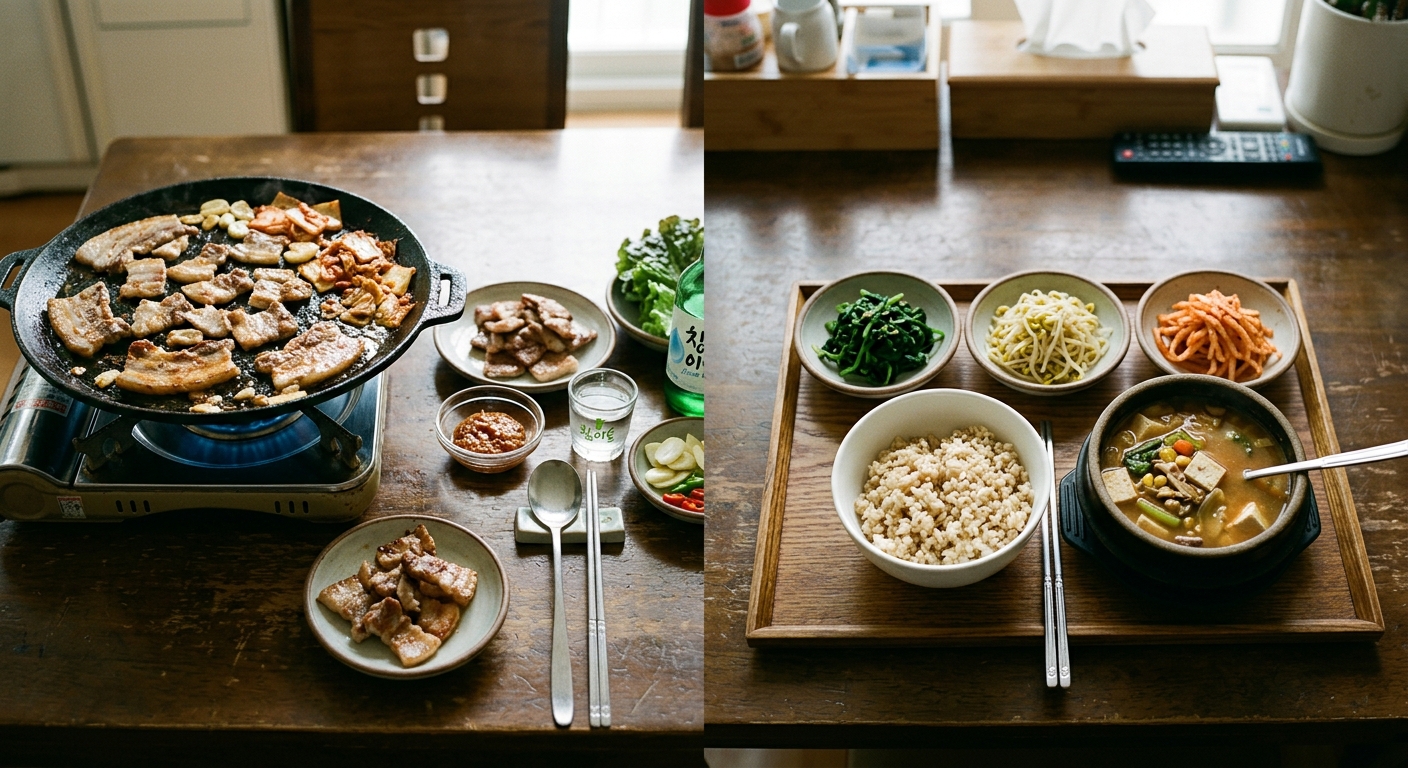
One more thing: bacon, pork ribs, and a well-marbled ribeye aren't really "protein." They're protein with a large fat delivery system attached. Nobody needs to ban them. But swapping the cut alone changes the calorie load of the exact same meal, dramatically.
Does one drink really erase an hour at the gym?
This is the genuinely unfair part. Alcohol doesn't convert straight into belly fat — but it shoves fat burning to the back of the line.
Your body treats alcohol as a toxin and metabolizes it first, before anything else. While that's happening, fat oxidation is essentially on hold and blood triglycerides go up. That's why the cold beer you've earned after a long walk quietly cancels a good chunk of what the walk accomplished.
I ran the numbers. A pint of standard IPA runs about 200–250 calories, a 5 oz pour of wine about 125, a bourbon on the rocks about 100. Two beers and a couple of pours puts you around 600 calories — for a 155 lb (70 kg) person, that's about two hours of brisk walking to burn off.
And that's before food. Add wings, chips and queso, or a late slice and the math stops working entirely. If your exercise habit is 15 minutes a day, a single night out erases four weekdays of it.
Picture the scene. Saturday afternoon, smoker going in the backyard, folding table loaded with ribs, brisket, and sausage. Cooler of beer within arm's reach, someone mixing drinks in a big plastic cup, kids working through a bag of chips off to the side.
It's a genuinely great afternoon. Nutritionally, it's a rough combination — fat, alcohol, and refined carbs all arriving in the same sitting, for several hours.

Here's what I find interesting: families like this are usually the quickest to blame genetics. But obesity that's purely genetic is rare. When someone marries into the family and develops the same midsection a few years later, that's not DNA — that's the table and the routine around it, and those are far stronger than most people give them credit for.
Sorting through all this, the same handful of misconceptions kept coming up.
| What most people assume | What the evidence says |
|---|---|
| My weight is normal, so I'm fine | Waist circumference alone is enough for an abdominal obesity diagnosis |
| I swim every day, the belly will follow | Exercise rarely out-runs the amount you're eating and drinking |
| Weight gain runs in my family, nothing to do | Purely genetic cases are rare; shared habits do most of the work |
| Just cut the carbs and it comes off | Muscle goes first, which sets up the rebound |
| I'll just drink the low-calorie stuff | Any alcohol pauses fat burning, regardless of type |
Two weeks. Change only these five things.
Waist circumference responds faster than most people expect, because visceral fat is the first fat to go. Two weeks is genuinely enough to see the tape move.
- Pick three alcohol-free nights a week. Not quitting — spacing. Going from nightly to two or three times a week removes several days' worth of that 600-calorie math above.
- Nothing after 9 p.m. Late-night takeout and snacks push your next-morning fasting glucose up. For reference: under 100 mg/dL is normal, 100–125 is prediabetes, and 126 or higher is the diabetes threshold.
- Two-thirds of the starch, all of the vegetables. Reduce, don't eliminate. Drop below half and you've slid to the left end of that U-shaped curve.
- Change the cut, not the meal. Sirloin, pork loin, chicken breast, or fish instead of ribeye, bacon, and ribs. Restriction fails; substitution sticks.
- Fifteen minutes a day, slightly out of breath. A 15-minute brisk walk after dinner beats one heroic two-hour session on Saturday. Hard workouts don't survive two weeks.
Track it with the tape, not the scale. Same day of the week, same time, same posture, once a week is plenty.
If you only do one thing tonight
Go find the tape measure in the junk drawer. Forty inches for men, thirty-five for women. The gap between those numbers and yours is your target for the next two weeks.
Diabetes and high blood pressure give you nothing in the early stages. By the time your body sends a clear signal, you're usually already at the point of starting medication. Feeling completely fine, like you do right now, is actually the best possible time to check.
It takes ten seconds to wrap a tape around your waist.