Ever wonder how differently two AI models handle the exact same job? Launch-day slides love to wave around benchmark numbers — 92 here, 88 there — and honestly, those digits tell you nothing about what shows up on your screen at 11pm on a deadline. So I skipped the scores. I handed ChatGPT 5.6 and Claude Fable 5 identical prompts and judged nothing but the output.
Building an entire city in 3D. Making an RPG from scratch. Cloning a design tool. A pitch deck, and a website that stops your scroll. By the end of this you'll know which of these two belongs in your workflow — and it may not be the one that won on quality. Five rounds, output only. Let's go.
Short on time? The three-line version
- On pure output quality, Claude Fable 5 took most of the five rounds.
- ChatGPT 5.6 rarely made me sit up in my chair, but it handled almost everything competently — and for a lot less money.
- Complex work where visualization is the whole point: Claude. Everyday production work you run all day long: ChatGPT is the realistic pick.
The two fighters — and the one-shot rule
Before the bell, here's the setup. This comparison ran in July 2026, with each model getting the same prompt exactly once. No follow-ups, no nudging, no "try again but better."
| Spec | ChatGPT 5.6 | Claude Fable 5 |
|---|---|---|
| Model variants | Sol · Terra · Luna (three tiers) | Fable 5 |
| Settings used here | Sol, performance set to Ultra | Ultra Code mode |
ChatGPT 5.6 splits into three variants — Sol, Terra, and Luna. To give it the best possible shot I went with Sol + Ultra, and Claude answered with Fable 5 + Ultra Code.
Same prompt. One shot each. Lights up.
Round 1 — Build all of Seoul in 3D and make the physics behave
First mission: "Build a working 3D model of Seoul." Pretty pictures weren't the point. The real test was how convincingly each one simulated natural forces and physics.
ChatGPT 5.6 turned out a genuinely respectable Seoul.
- The Han River cutting through the middle, a lit-up night skyline, apartment blocks, and the river bridges
- N Seoul Tower, Lotte World Tower, and clusters of downtown high-rises
- Traffic density sliders from zero to gridlock, a day/night toggle, plus rain and snow effects
The problem was the headline feature: the physics sandbox. I cranked the earthquake magnitude to the top of the scale and the buildings barely shivered. A ball dropped from a height should land with some weight behind it, and it just… didn't.
The lasting impression was "less than I'd hoped for."
Claude Fable 5 came at it differently. It built a dense, music-box-like little city with N Seoul Tower, the Han River, the 63 Building, Lotte World Tower, moving cars and trains, and even Gyeongbokgung Palace (Seoul's main royal palace) tucked in. Comparable so far — then the physics arena blew the gap wide open.
- Balls bounced naturally, and boxes behaved like boxes, tipping and tumbling over their corners instead
- Wind speed and direction were reflected accurately in how objects flew
- A clear destruction difference between a magnitude 5.5 and a 9.0 quake, plus a meteor-strike disaster and staged rebuilding afterward
- A side panel on the right computing height, real-world measurements, and velocity live
Round 1 winner: Claude Fable 5. Getting the physics right down to the small stuff decided it.
Round 2 — Can one prompt produce a playable RPG?
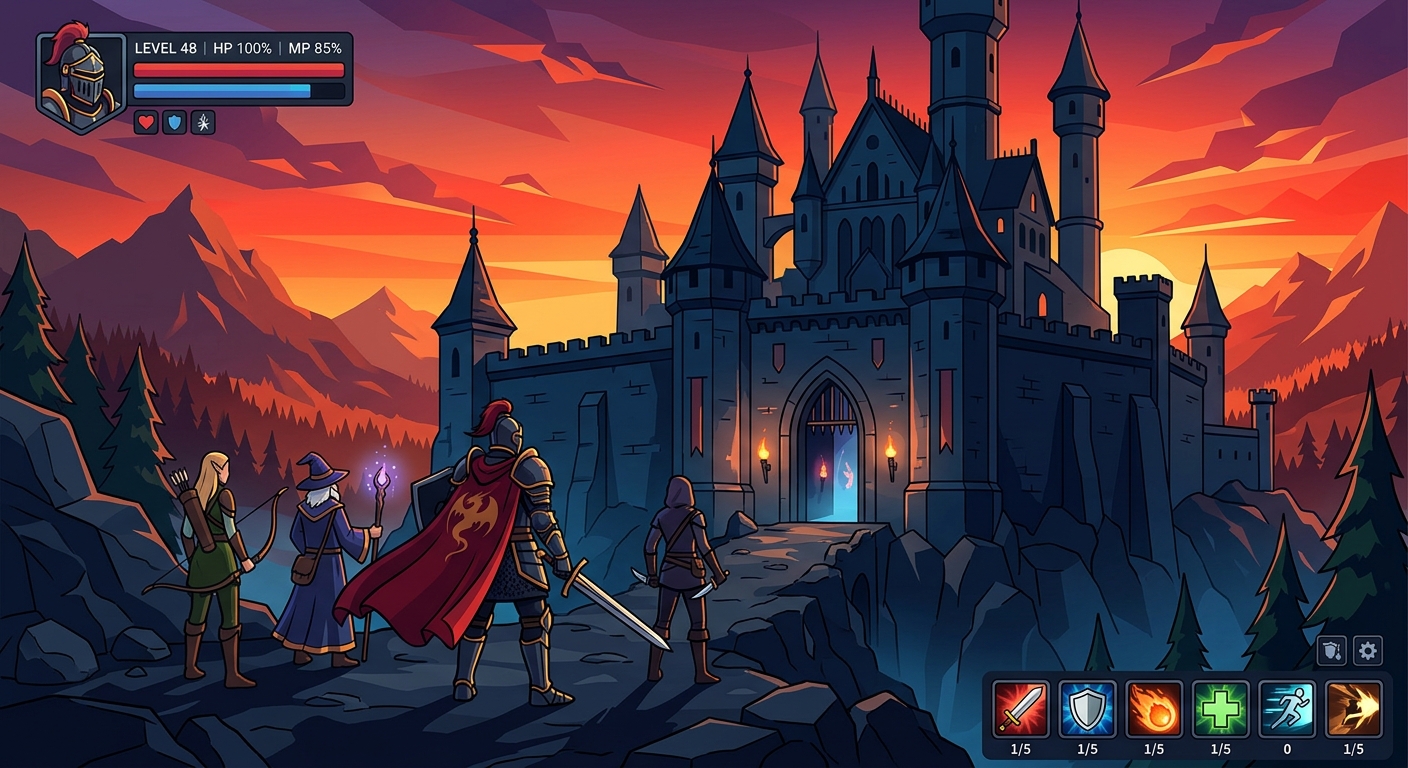
Next: "Build a fantasy RPG from scratch." Story progression, quests, combat, a boss fight — all of it actually has to run. This one is hard.
ChatGPT 5.6 started okay and then came apart. The character models were clumsy, the attack animations were stiff, and worst of all the dialogue had that unmistakable written-by-an-AI smell.
Monster designs felt phoned in and the difficulty curve was all over the place. I struggled to play it to the end.
Claude Fable 5, meanwhile, shipped a game called The Crimson Oath.
- A prologue that actually felt like an RPG
- Natural quest dialogue and noticeably better in-game writing across the board
- Leveling, companions joining your party, a skill system, and a boss fight
- A twist ending where the knight-captain who handed you your first quest turns out to be the traitor
All of that from a single prompt.
Round 2 winner: Claude Fable 5. The writing gap showed up directly in the game's scenario.
Round 3 — Clone Canva in one click
Third up: "Clone a design tool like Canva in one click." Looking the part wasn't enough — the editor had to actually work to score.
Both nailed the fundamentals. Image uploads, rotation and opacity controls, shape elements like rectangles, circles and arrows, five font choices, border and shadow effects, and a working export of the finished file.
The difference showed up in exactly one place: the AI generation feature.
- ChatGPT 5.6: its "AI generate" mostly swapped new text into a canned sample layout. Set that aside and there was nothing to complain about.
- Claude Fable 5: nearly identical at first glance, with a few more element and style options, plus brand kits and background removal.
I put both up side by side and stared at them for a while. Picking a winner honestly felt arbitrary.
Round 3: draw. These two came out mirror images of each other.
Round 4 — Coffee brand pitch deck: whose is cleaner?
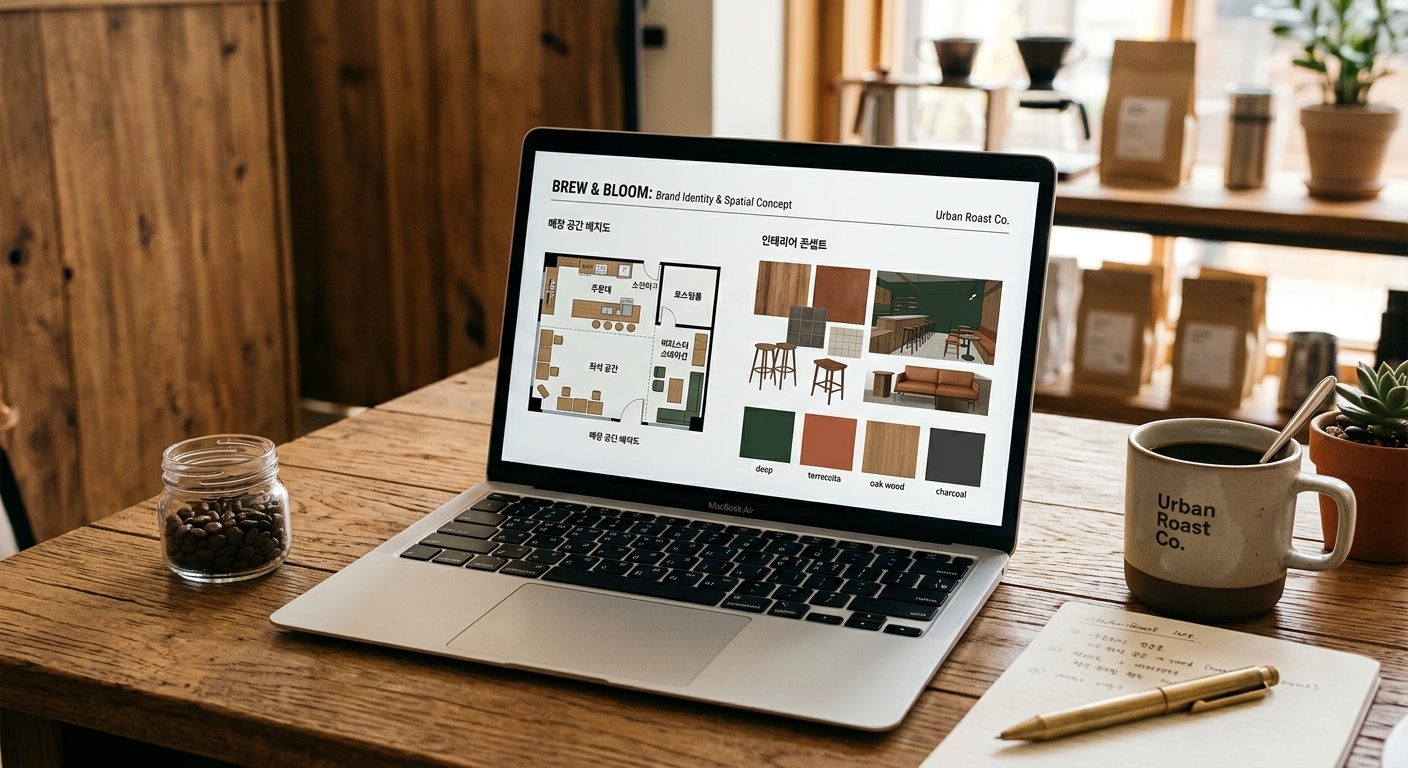
For a quick one, I also asked for "a coffee brand pitch deck as a slide presentation."
One deck came back clean, with stable line breaks, layout, and image placement — and it went further, sketching a floor plan for the coffee shop with furniture, walls, and interior concepts drawn from the brand palette.
The other one (branded "LS Roastery") had alignment that wobbled slightly and stuck to default system fonts, so typography, letter spacing, and image use all landed a half-step short.
The cleaner deck was Claude. The underwhelming one was ChatGPT.
Round 4 edge: Claude Fable 5. Half a step ahead on overall polish.
Round 5 — A website that stops your scroll
Last mission: "a visually striking website that makes people stop scrolling." Both showed up here.
- ChatGPT 5.6: a solar-system-style scene. Scroll down and space keeps unfolding; click or press-and-hold a planet and you get something that plays like a movie trailer for a piece called Last Signal.
- Claude Fable 5: a piece titled The Depth of Stars. Elements drift with your cursor, ripple outward on click, and the story advances as you scroll. Encountering jellyfish and then an enormous whale gave it the feel of a quiet fantasy storybook — lavish, but hushed.
Round 5: down to taste. Cinematic spectacle or slow-burn narrative — both pass.
The final scoreboard
| Round | Mission | Result |
|---|---|---|
| 1 | 3D Seoul + physics sandbox | Claude |
| 2 | Original RPG | Claude |
| 3 | Canva clone | Draw |
| 4 | Coffee brand deck | Claude, narrowly |
| 5 | Interactive website | Personal taste |
So which one should you actually pay for?
If output quality is the only criterion and I have to name one, it's Claude Fable 5. On the work that matters — complicated jobs, anything where visualization carries the idea — it's the one that reads a vague prompt and still brings back what you had in your head.
But there's one decisive catch. Lining up what each model cost me to run, Claude came out to roughly twice ChatGPT's price in practice. If you're firing off prompts several times a day, that gap compounds into something you'll feel on the monthly bill.
ChatGPT 5.6 Sol is the classic value play, on the other hand. It won't make you gasp, but it handles most of what you throw at it competently and it's much easier on your wallet.
| If this is you | Pick |
|---|---|
| Quality and visualization first, budget second | Claude Fable 5 |
| A cost-effective daily driver for production work | ChatGPT 5.6 (Sol) |
The whole decision collapses into one line: is that output worth paying double for, for the work you actually do? Take the single task sitting in front of you right now and run it through that question.
So — which one would you open your wallet for?