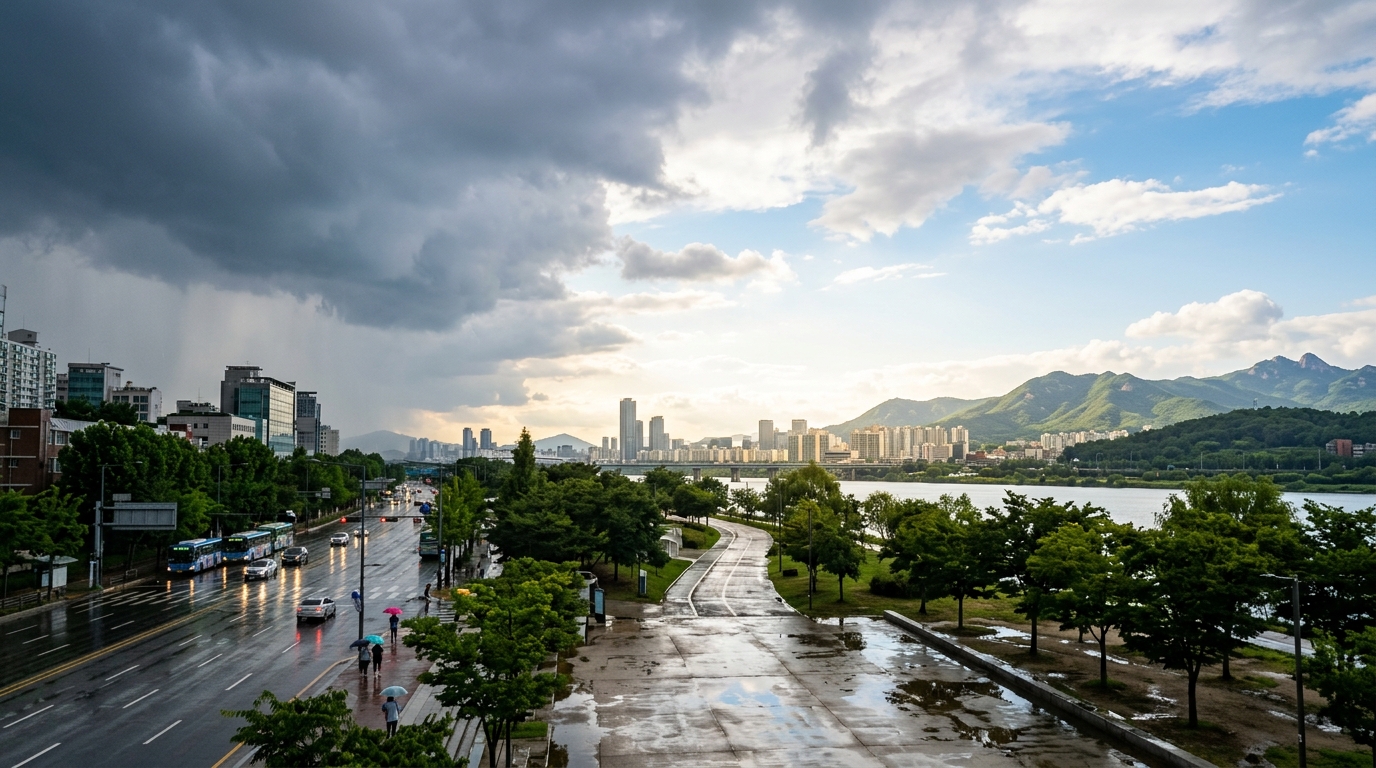
- Korea's 2026 rainy season got a late start — it didn't fully ramp up until July, which forecasters say hasn't happened in 53 years.
- Expect a short, intense downpour pattern rather than weeks of steady drizzle. Fewer rainy days, but a lot more water falling at once.
- Once jangma lifts, it usually hands off straight to heat waves and tropical nights. Splitting your prep into two phases makes the whole summer easier.
If you're in Korea right now, you know the drill: laundry never quite dries, and every weekend plan gets held hostage by the forecast. Add in the news that the rain arrived unusually late this year, and the question everyone keeps asking is simply "when does this end?" This post walks through how Korea's July 2026 rainy season is shaping up, when it's likely to wrap, and what kind of weather is waiting on the other side.
Day-by-day forecasts shift constantly, so I've focused on the big picture and the practical prep instead. For specific regional rainfall numbers, always cross-check the Korea Meteorological Administration (KMA) at the time you're planning — their English site and the Weather-i app both post updates.
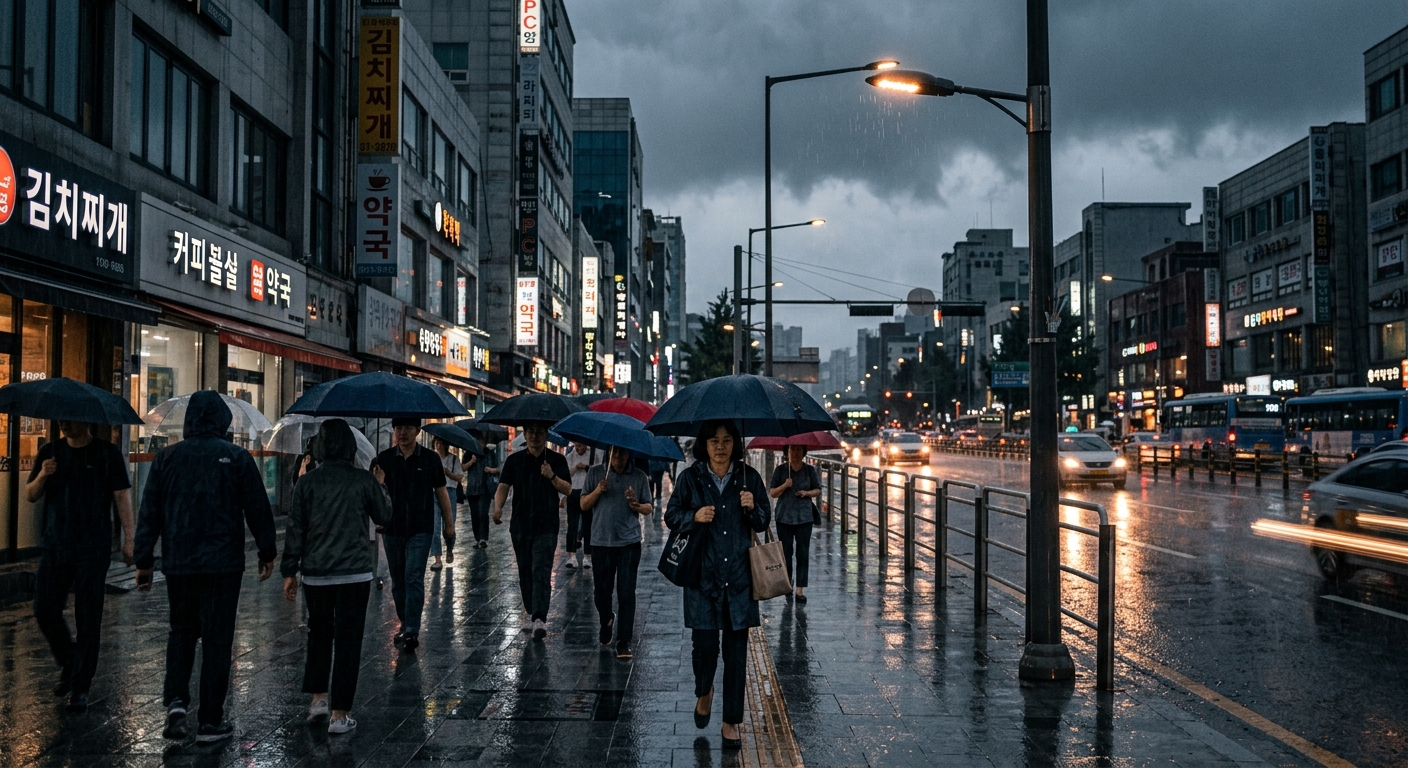
Why Korea's rainy season showed up so late this year
Jangma happens when warm, humid air pushed north by the North Pacific high collides with cooler air from the north, creating a stationary front. As long as that front parks itself over the Korean Peninsula, you get day after day of overcast skies and rain. This year the front's northward march was slower than usual, which pushed the real start of the season into July.
In the weather record, a rainy season that doesn't get going until July is genuinely rare — rare enough that "first time in 53 years" is the phrase making the rounds. Practically speaking, that means you can't lean on a typical Korean summer to predict this one. And when the season starts late, it tends to make up for lost time: heavy rain compressed into a shorter window.
So when does it end? What to watch for
The rainy season breaks when the North Pacific high finally expands over the entire peninsula and shoves the stationary front north. A late start doesn't automatically mean a late finish — if that high builds quickly, jangma can actually wrap earlier than expected. But the front can also drift back and forth, which is how you get that "wait, I thought it was over" feeling. Even after the official end, localized showers often keep coming.
Rather than circling a date on the calendar, it's more useful to read the signals. The more of these you see stacking up, the closer you are to the end of the rain.
- Daytime highs push past 30°C (86°F) day after day, with that thick, sticky heat-wave feel
- The rain shifts from all-day frontal soaking to afternoon thunderstorms and showers
- Tropical nights begin — temperatures that refuse to drop after dark
- Humidity stays high, but the sky clears and the sun gets noticeably harsher
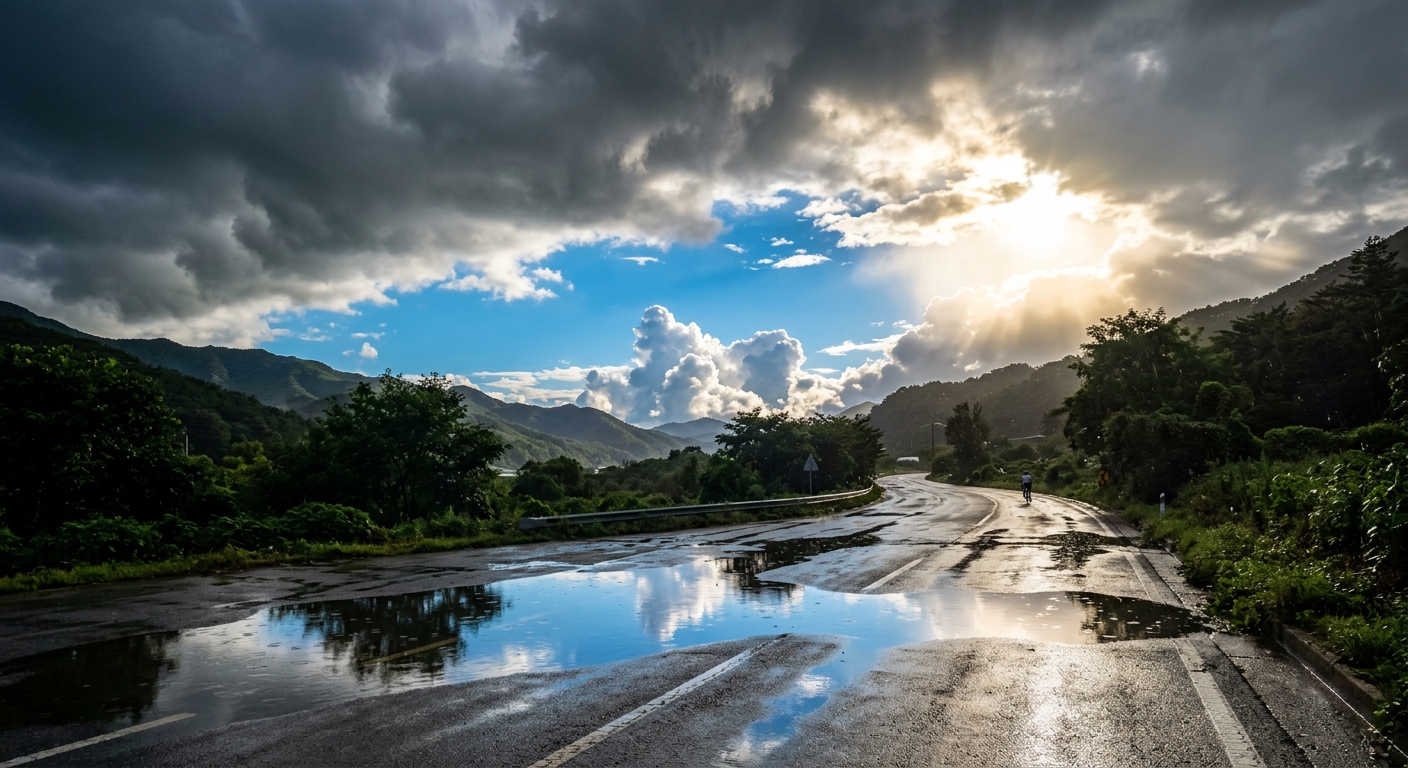
After the rain: get ready for heat waves and tropical nights
Honestly, the harder part of a Korean summer often starts after jangma ends. When the stationary front retreats, a dome of hot high pressure moves into its place. Intense sun plus leftover humidity equals full-on steam-bath heat. All that moisture the rainy season left in the air pushes the heat index well above the actual temperature.
When nighttime lows stay above 25°C (77°F) — Korea's official definition of a tropical night — sleep quality tanks and the risk of heat illness climbs. Servicing your AC, building a real hydration habit, and planning around midday sun before the rain even stops makes the back half of summer dramatically more livable.
During jangma vs. after: what actually changes
| Category | During the rainy season | After the rainy season |
|---|---|---|
| Main risk | Torrential rain, flooding, landslides | Heat waves, tropical nights, heat illness |
| Rain pattern | Persistent frontal rain | Scattered afternoon showers |
| How it feels | Damp, cool rain | Oppressive heat, harsh sun |
| Prep priority | Drainage, waterproofing, safe distance | Cooling, hydration, sun protection |
Heavy-rain prep worth doing right now
A late-starting rainy season tends to arrive short and violent, so plan for a lot of rain in very little time. In cities, the pattern repeats every year: storm drains clog, roads flood, and low-lying parking garages fill with water. Just moving your car ahead of time can spare you an enormous headache.
If you're out and about a lot, run through the list below. None of it costs much, and it meaningfully cuts both the hassle and the risk on nasty days.
- Turn on real-time weather alerts and Korea's emergency text notifications — the government pushes flood and storm warnings straight to your phone (the Emergency Ready App covers this in English)
- Know which parts of your route flood: riverside paths, underpasses, low bridges
- Move your car out of basement garages and low-lying lots to higher ground
- Keep a change of clothes, a waterproof bag, and a packable rain poncho on hand
- Charge a power bank and a flashlight in case the power goes out
Bottom line: how to ride out jangma 2026
To sum up: Korea's 2026 rainy season is an outlier — the latest start in 53 years, with short bursts of heavy rain expected. And when it clears, the center of gravity shifts immediately to heat waves and tropical nights. Instead of pinning down an end date, read the signals: rising temperatures and a switch to afternoon showers.
Split your to-do list in two. While the rain lasts, prep for downpours and flooding; as it starts to break, pivot to heat prep. Today, just check the KMA forecast and switch on your emergency alerts. Knock out even one item from the checklist above and you'll get through this summer a lot safer.