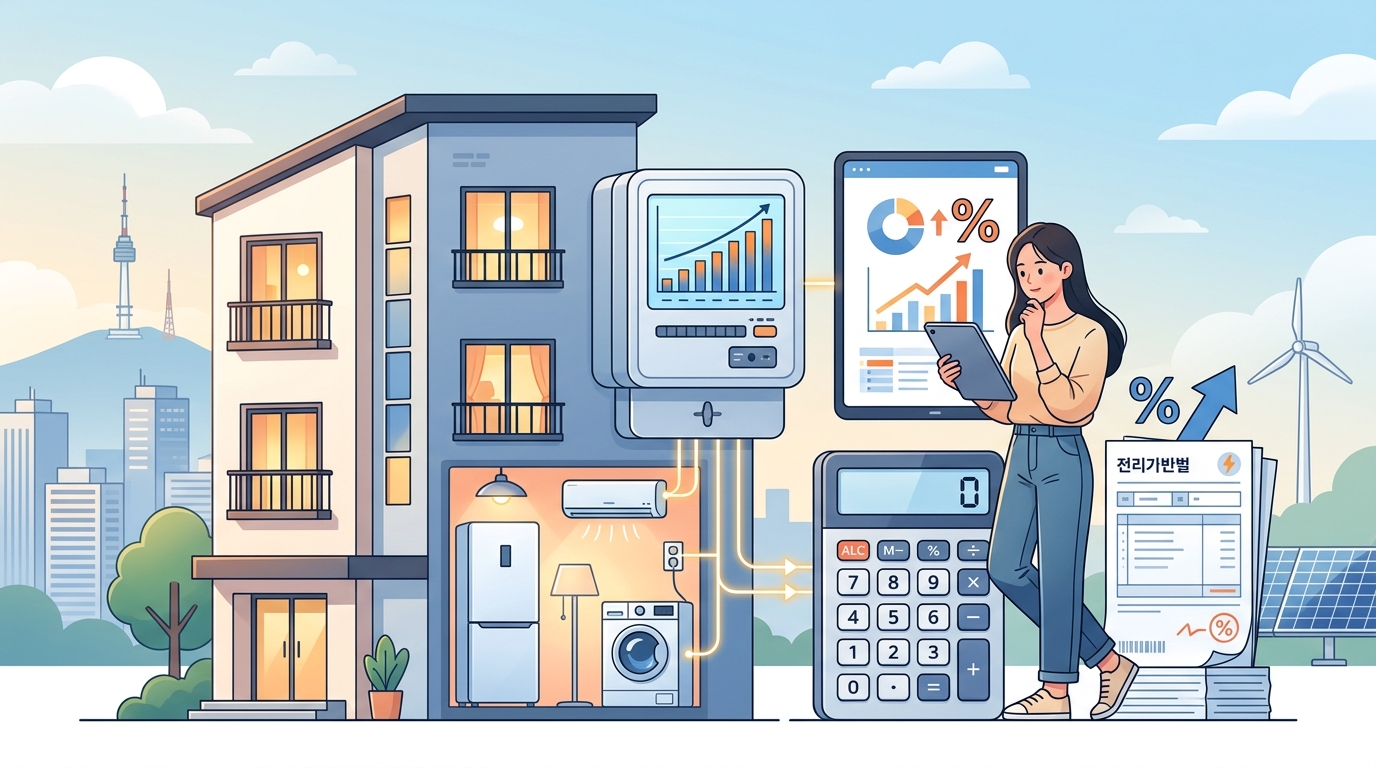
If you wince a little every time the electric bill lands, you're in good company. But here's the shift a lot of households miss: on a growing number of plans, your bill isn't just about how much power you use. It's about when you use it.
That's the whole idea behind time-of-use (TOU) electricity rates: cheaper in the middle of the day, pricier on weekday evenings. Millions of US customers are already on a TOU plan without fully realizing it, and utilities keep moving more people onto them. Learning the rules early is what turns this into savings instead of a nasty surprise.

What time-of-use rates actually mean
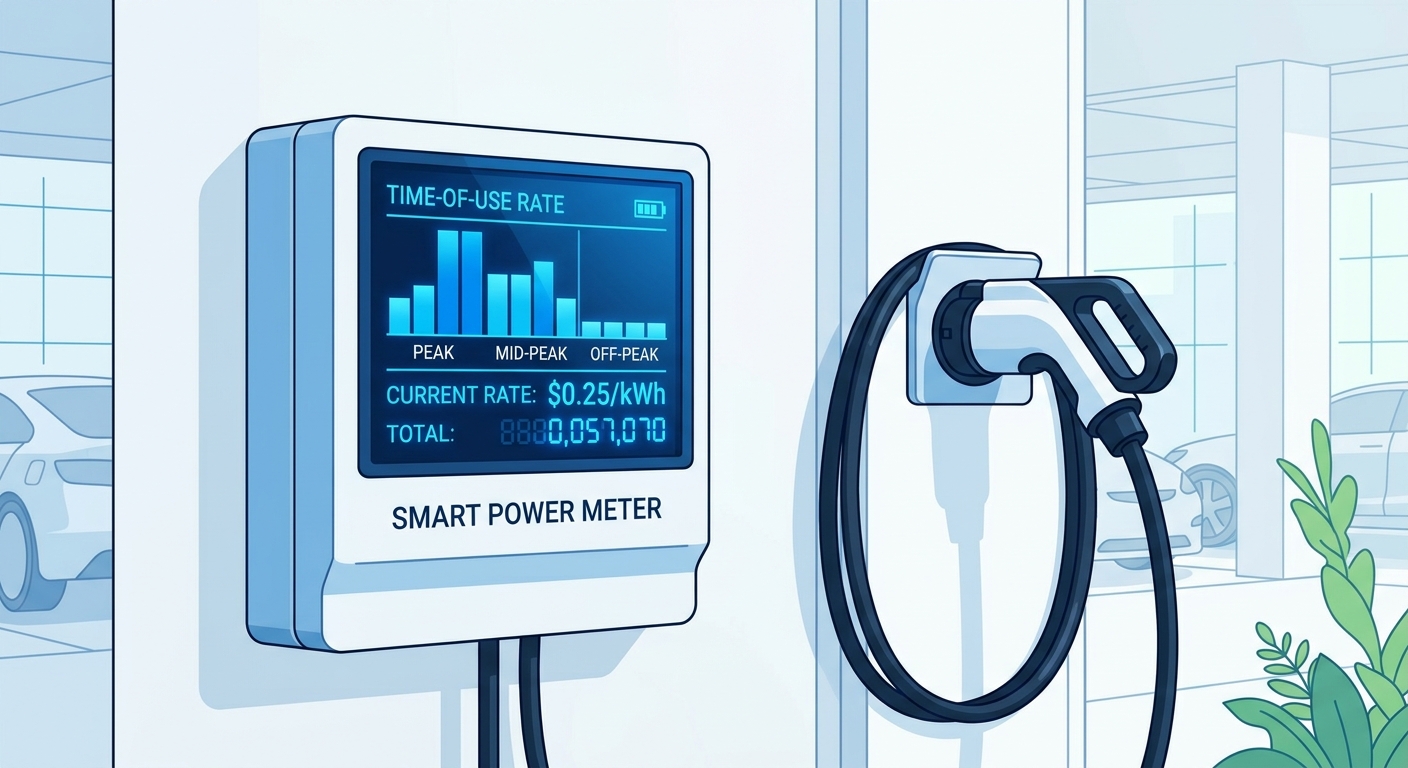
A TOU plan splits the day into pricing blocks — usually off-peak, mid-peak, and on-peak — and charges a different rate per kilowatt-hour in each one. When demand on the grid is heavy, power costs more. When there's plenty to go around, it costs less. On some plans the off-peak rate is close to half of what you'd pay during the evening crunch.
The reason is pretty simple. Solar has gotten so cheap and so widespread that the middle of the day is now flush with power, while demand spikes right as the sun goes down and everyone gets home, cranks the AC, and starts cooking. Utilities use price to nudge that load around. So the structure quietly rewards anyone who can move electricity use into the cheap hours.
Who gets moved onto TOU first
Nobody flips a switch and puts everyone on TOU at once. Large commercial and industrial customers have been on time-varying and demand-based rates for decades, because they're where the biggest load sits. Residential customers come later, and the pace depends almost entirely on smart meter coverage.
Some states are much further along than others. In California, TOU is already the default for most residential customers, and utilities across the Southwest, Texas, and the Northeast offer opt-in TOU or EV-specific plans. Rooftop solar and EV owners often get defaulted onto one. Here's the general shape of the pricing blocks you'll run into:
| Rate period | What it usually looks like |
|---|---|
| Off-peak | Overnight and midday hours — the cheapest kWh price on the plan |
| Mid-peak | Shoulder hours, late morning and later in the evening — middle price |
| On-peak | Weekday evenings, very commonly 4–9 p.m. in summer — the most expensive block |
| Weekends and holidays | Often billed as off-peak or mid-peak all day, depending on the utility |
The key thing: these windows are set by your specific utility and plan, not by a national rule. Your rate schedule is printed on your bill and spelled out in your online account, and it's worth two minutes of your time to look it up. A plan with a 4–9 p.m. peak and one with a noon–7 p.m. peak call for completely different habits.
How different are day and night prices, really?
Wide enough to notice. On many residential TOU plans the on-peak rate runs roughly two to three times the off-peak rate, and in high-cost service areas that's the difference between something like 15¢ and 50¢+ per kWh. Run the dryer and the oven at 6 p.m. on a July weekday and you're paying the most expensive electricity of your entire month.
EV drivers get the biggest upside. Dedicated EV rate plans and overnight super-off-peak windows exist specifically to pull charging into the small hours, and a driver who just sets the car to start at midnight instead of at dinnertime can cut charging costs dramatically without changing anything else about their day.
This isn't only a US story, either — it's where grids are heading globally. South Korea, for example, starts rolling out nationwide time-of-use pricing in April 2026, and its EV charging rate gets cut roughly in half, from about ₩97 per kWh (~7¢) down by ₩40–49 per kWh (~3–3.5¢). Different country, exact same logic: pay less when the grid has room.
Will your bill actually go up?
Honestly? Nobody can hand you a percentage. It depends on your utility's rate schedule and on your own household pattern, and plenty of people switch to TOU and pay less. Anyone throwing out a scary number without looking at your usage data is guessing.
The direction, though, is clear. The more electricity you pile into the evening peak, the more a TOU plan costs you — and the more you can shift into midday or overnight, the better you do. Start adjusting now and you're ahead of it whenever your utility makes the change.
- Use the delay-start timer on the washer, dryer, and dishwasher so they run midday or overnight
- Schedule EV and e-bike charging for the cheap window instead of plugging in at 6 p.m.
- During the evening peak, avoid stacking high-draw appliances at the same time
- When your utility sends a rate-change or smart meter notice, pull your usage data before you pick a plan
Tiered rates vs. time-of-use: not the same thing
This is where people get tangled up, so let's separate them. Many households are still on a tiered rate, where the price climbs as your monthly total goes up. TOU is a different calculation entirely.
- Tiered rates — the price per kWh rises once you cross a monthly usage threshold. The clock doesn't matter at all, only the total.
- Time-of-use rates — the price depends on the hour you used the power. Timing matters as much as the total.
So if you're still on a tiered plan, your summer bill is being driven by which tier you land in. I broke down how those thresholds work — and how to stay under the expensive one — in how tiered electricity rates work and how to keep your summer bill down.
What changes once you're on a TOU plan
The thing you manage changes completely. On a tiered plan you watch the monthly total. On TOU, the same total can produce very different bills depending on when you used it.
These are the habits worth building now. They cost you nothing today, and they pay off the moment your rate plan changes.
- Move the flexible loads first. Washers, dryers, and dishwashers almost all have delay-start timers. Just getting those off the evening peak is half the job.
- Charge late or midday. The EV is the obvious one, but laptops, power tools, battery packs, and the robot vacuum are all things that genuinely don't care what time they charge.
- Automate with smart plugs. For anything without a built-in timer, schedule it at the outlet. Set it once and forget it.
- Don't stack big appliances during peak. Running the AC, the induction cooktop, and the dryer at the same time on a summer evening is the single most expensive thing happening in your house.
Smart meters are the key
The reason residential TOU rollout moves at different speeds in different places comes down to hardware. Billing by the hour requires a smart meter (AMI) that records interval usage, and coverage still isn't universal.
You can check whether you have one through your utility's app or online account — if you can see hour-by-hour or 15-minute usage graphs, you've got a smart meter. Most utilities also let you download your own data through Green Button, which is worth doing before you commit to a plan so you know exactly which hours your household is loading up.
Once you can see the pattern, you can estimate how much of your usage is actually movable. A household with very little shiftable load may not come out ahead on TOU. A household that's empty all day and doesn't cook big dinners usually does.
Can you choose whether to be on a TOU plan?
Usually, yes — but it varies. Many utilities offer TOU as an opt-in with a bill-protection trial for the first year. Others, California's big three among them, default residential customers onto TOU and let you switch back to a tiered plan. Check what your utility offers before assuming either way.
Is an empty house during the day automatically a win?
Generally, yes. But if everyone gets home at 6 p.m. and the AC, the stove, and the laundry all fire up at once, that advantage evaporates fast. What really decides it is how well you dodge the peak window.
The bottom line
Time-of-use electricity rates are cheap midday, expensive on weekday evenings, and they're spreading — first through large commercial customers and EV plans, then through residential customers as smart meters go in. If you're not on one yet, you probably will be.
The most reliable prep costs nothing: start paying attention to when you use power. Sounds too simple to matter, right? But shifting one or two high-draw appliances out of the evening peak turns straight into savings the day your rate plan changes. Start by pulling up a month of your own usage data and seeing where your spikes actually land.
Will residential electricity rates all move to time-of-use pricing?
That's the direction, but the timing depends entirely on your state and utility. Residential rollout follows smart meter coverage, so some areas are already fully there and others are years out.
Does switching to a TOU plan automatically raise my bill?
No. It depends on when you use power. Shift usage into the cheap midday or overnight windows and you can come out ahead; pile it into the evening peak and you'll pay more.
Is there anything I should do right now?
Start with the flexible stuff — laundry and charging — and move it out of the evening. Then look up your utility's peak hours and download a month of your interval usage data so you know your own pattern.