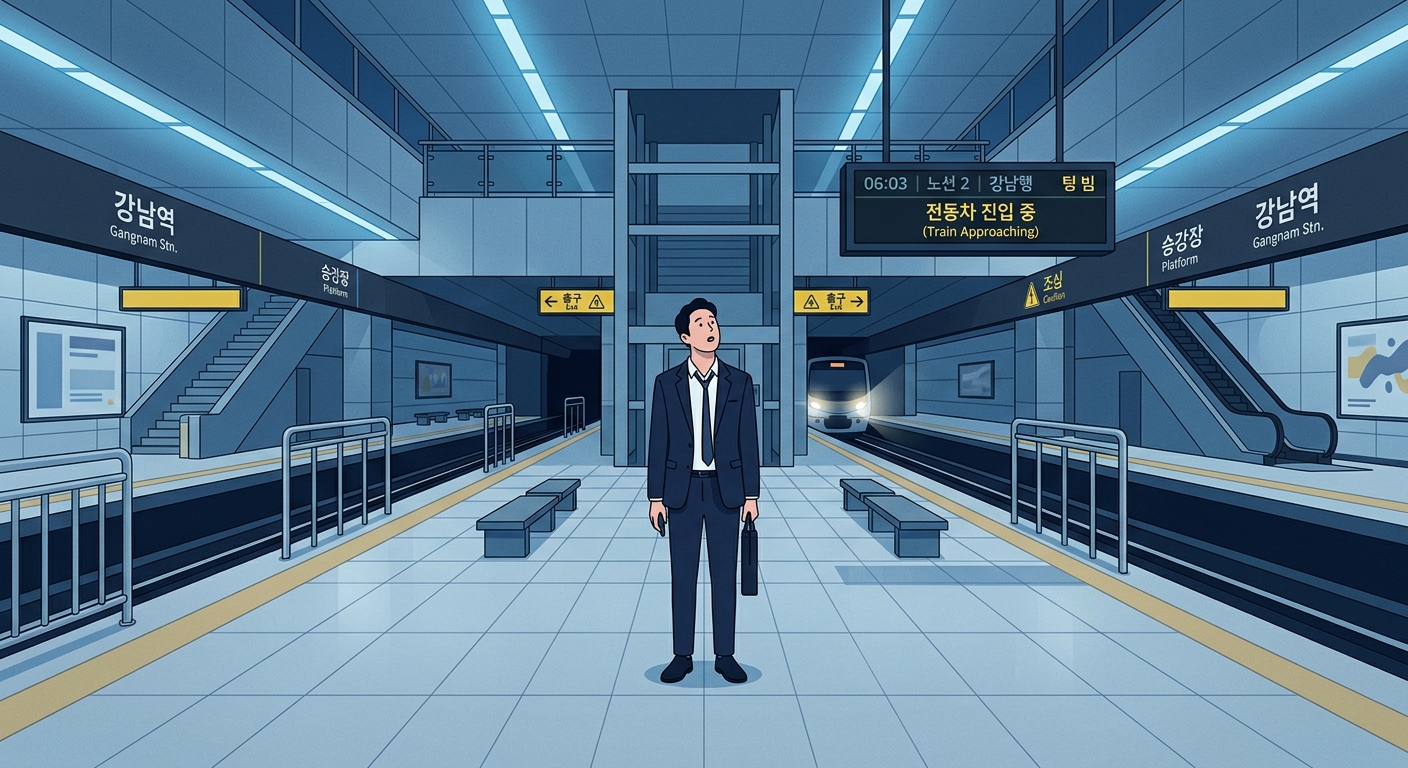
The day after he quit his job, his alarm went off and he did exactly what he always did: showered, ironed a shirt, caught the train. He was standing in the lobby of his old office building, finger hovering over the elevator button, when it finally landed. He had handed in his resignation the day before.
I laughed until I couldn't breathe the first time I heard that story. Then the laugh curdled a little, because a few days earlier I'd stood in front of my open fridge for a solid five seconds and asked myself "wait, why did I come in here?" three separate times. We hand the wheel over to autopilot far more often than we'd like to admit — and we do it with total confidence.
1. Your body moves first, and your mind catches up late
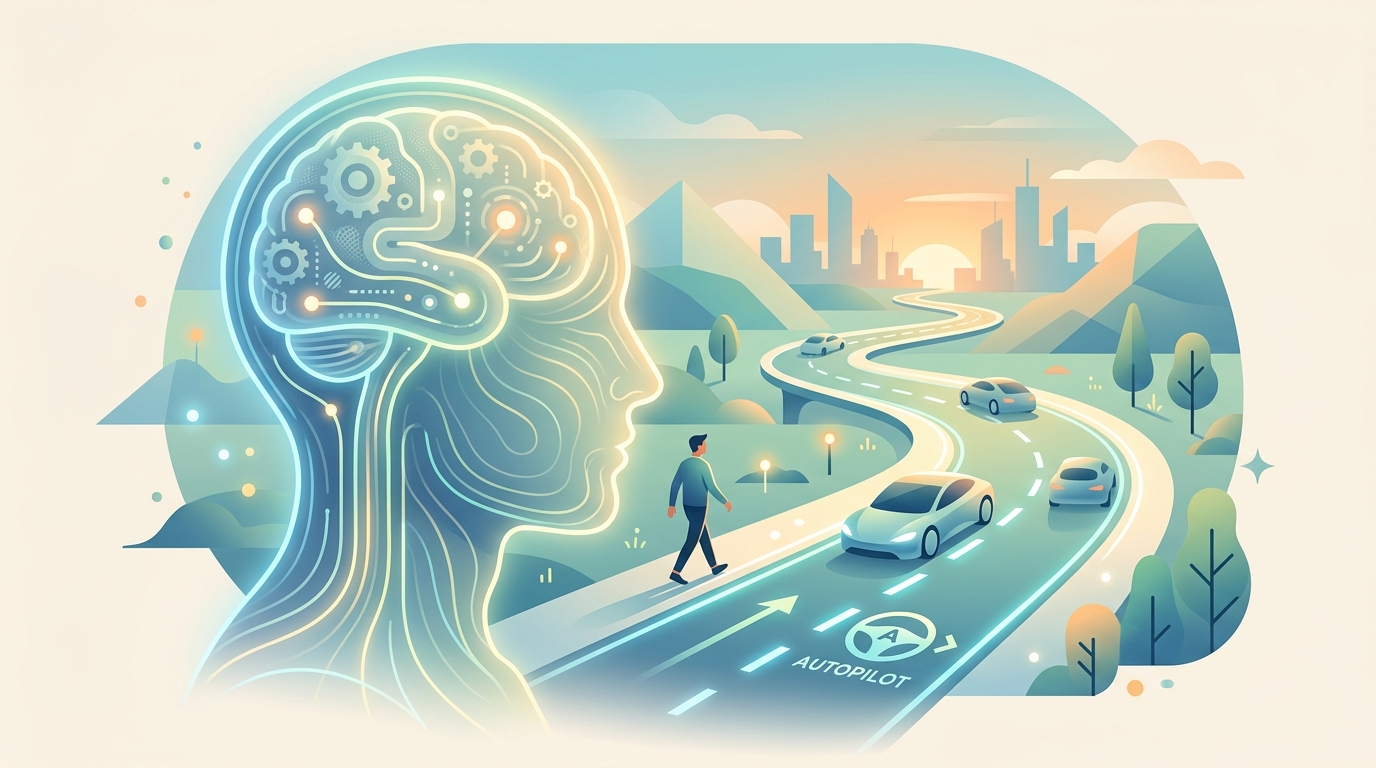
The most common version of this is a habit outrunning a decision. The accidental commute is a textbook case. Psychologists call it a capture error: a well-worn behavioral path reaches out and hijacks the thing you actually meant to do. The route you've run every single morning is carved so deep that new information — "today is different" — never gets a word in.
British cognitive psychologist James Reason gave these unintended lapses a name: action slips. He argued they aren't evidence of incompetence at all. They're evidence of an efficient brain. Automating the repetitive stuff is exactly what frees up mental bandwidth for problems that are actually new.
So the guy who showed up to a job he no longer had wasn't being dumb. His brain was being a little too conscientious. Whether that's comforting is up to you.
2. Nailing the goal, forgetting the tool
The second category is funnier. This is when you execute the mission perfectly and drop the entire means of accomplishing it.
- The person who set out to get their car washed, got a warm little glow of appreciation for how close the car wash is to their house, and walked there. They discovered the flaw in the plan on arrival, standing in front of the bay with nothing to wash.
- The person who drove their own car to an out-of-town work trip, then took the train home because it was more relaxing. Several days later they were genuinely, seriously puzzling over where their car had gone.
- The person who opened a browser to look something up and carefully typed "google" into the Google search bar. Already there. Fully inside the building, ringing the doorbell.
What's happening is that the goal — clean car, get home, find information — eats all the available space, and the instrument (the car, the search bar) evaporates out of context entirely. Working memory is a lot smaller than we assume: most estimates put it at roughly three or four chunks of information held at once. When the objective takes all four slots, the tool gets pushed off the desk.

3. Advanced level: leaving an actual human behind
Here's where the scale escalates. This one came to me secondhand, from a gas station. A couple pulled in to fill up. The husband ducked into the convenience store for a minute, the wife finished pumping, and then she calmly drove off by herself.
A while later, her phone rang.
| Husband | Wife |
|---|---|
| Hey, where are you right now? | On my way home, obviously |
| …And me? | (silence) Oh. Oh no. I left you there. |
It's not the three seconds of realizing your spouse is missing. It's the three seconds of realizing you are the one who abandoned them. Genuinely chilling to imagine. And for the record, this kind of passenger blindness is common enough that automakers took it seriously: rear seat reminder systems — the chime and dashboard message that nudges you to check the back seat after you park — now ship on a growing share of new vehicles in the U.S., right alongside the seat belt warning.
4. Taking a shortcut straight back to square one
My personal favorite genre is "tried to be clever, ended up exactly where I started."
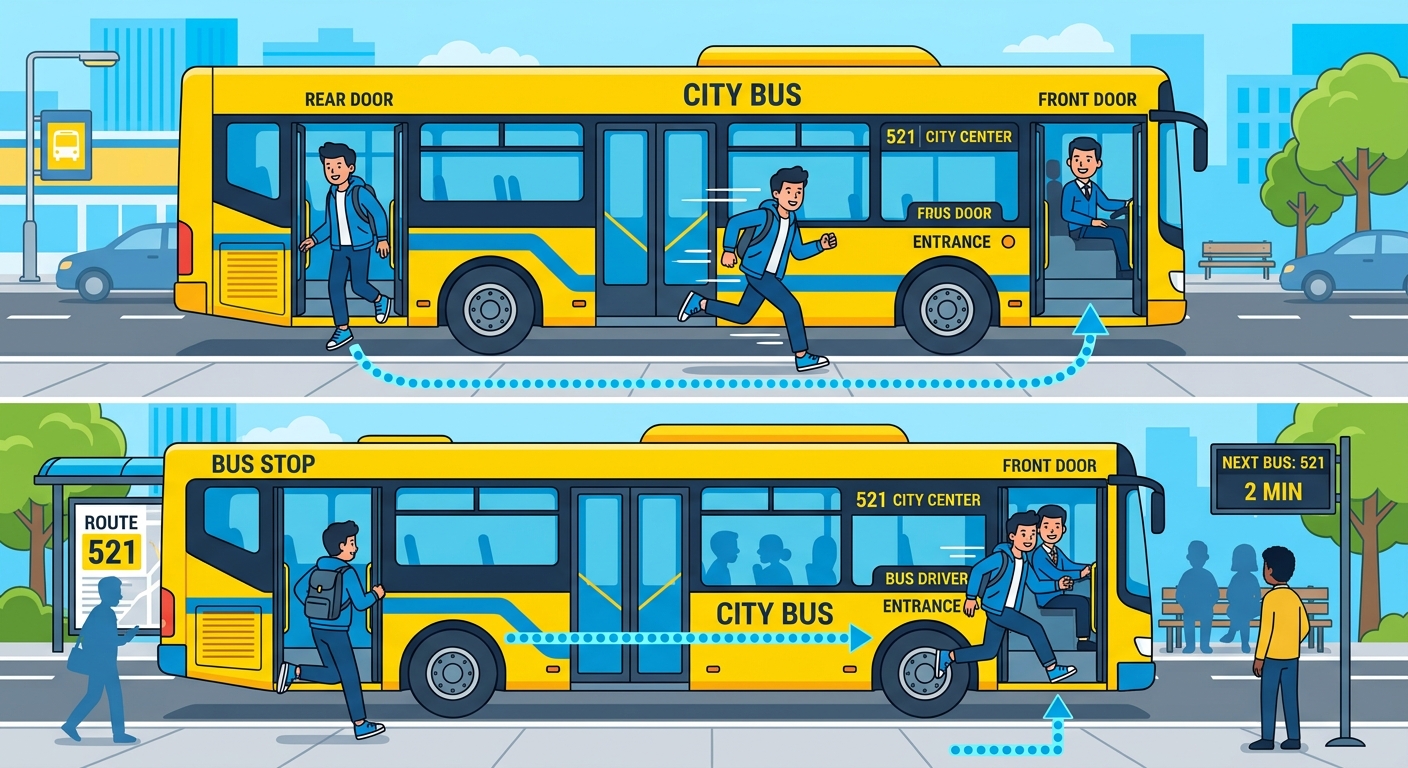
Someone riding a city bus glanced out the window and spotted the bus they were about to transfer to stopped just ahead. Cannot miss that one. So they scrambled out the rear door, sprinted up the block with everything they had, and hopped on through the front door of the bus in front. Very pleased with themselves. Great hustle. Elite footwork. Then, about two stops later, something started to feel off.
Hold on. Isn't this… the bus I just got off?
Out the back, in the front. A perfect closed loop, no route map required. I'm not sure there's a cleaner demonstration of how much narrower your field of view gets the more of a hurry you're in.
5. And finally: spitting while wearing a mask
Short but devastating. Someone, purely out of muscle memory, went to spit — while masked. I'll let you fill in the rest. It's a flawless illustration of how much faster a rehearsed physical motion fires than any assessment of the current situation.
So what do we actually take from this?
These stories are funny not because they happened to someone else, but because every single one of them could be your Tuesday. And here's the twist: the more capable you are, the more of your daily life you've automated — which means you're more exposed to this, not less. So if you did something spectacularly ridiculous today, go easy on yourself. Consider it a receipt proving your brain has been putting in the hours.
Just do one thing: right before anything that actually matters, pause for a beat and ask yourself, "am I on autopilot right now, or am I actually driving?" What was your most absurd moment today? Drop it in the comments and let's all feel better together.