Rain soaks your sneakers, August turns them into a sauna, and every time you head to the lake you remember you still don't own a pair of shoes you can just let get wet. If that's your summer on repeat, this one's for you. The Crocs Classic Clog (style 10001) ends up in almost everyone's cart eventually — but is it actually worth buying?
They're so common now that it's genuinely hard to tell whether people wear them because they're comfortable or because everybody else does. So I dug through the spec details and a wide range of owner reviews. Not just the flattering parts — the drawbacks you should know about before you check out, too.
Material, pros, cons, sizing, and price: five things to check before you buy, in that order. Stick around to the end and you'll also walk away knowing exactly how to pick a size that fits.
- Croslite foam is light and vented, so one pair covers the lake, rainy commutes, and everything around the house
- They're built to get wet and rinse clean in seconds — maintenance is basically zero
- The catch: no half sizes and a roomy fit, so sizing is the one thing you have to get right
1. Why Is Everyone Wearing These?
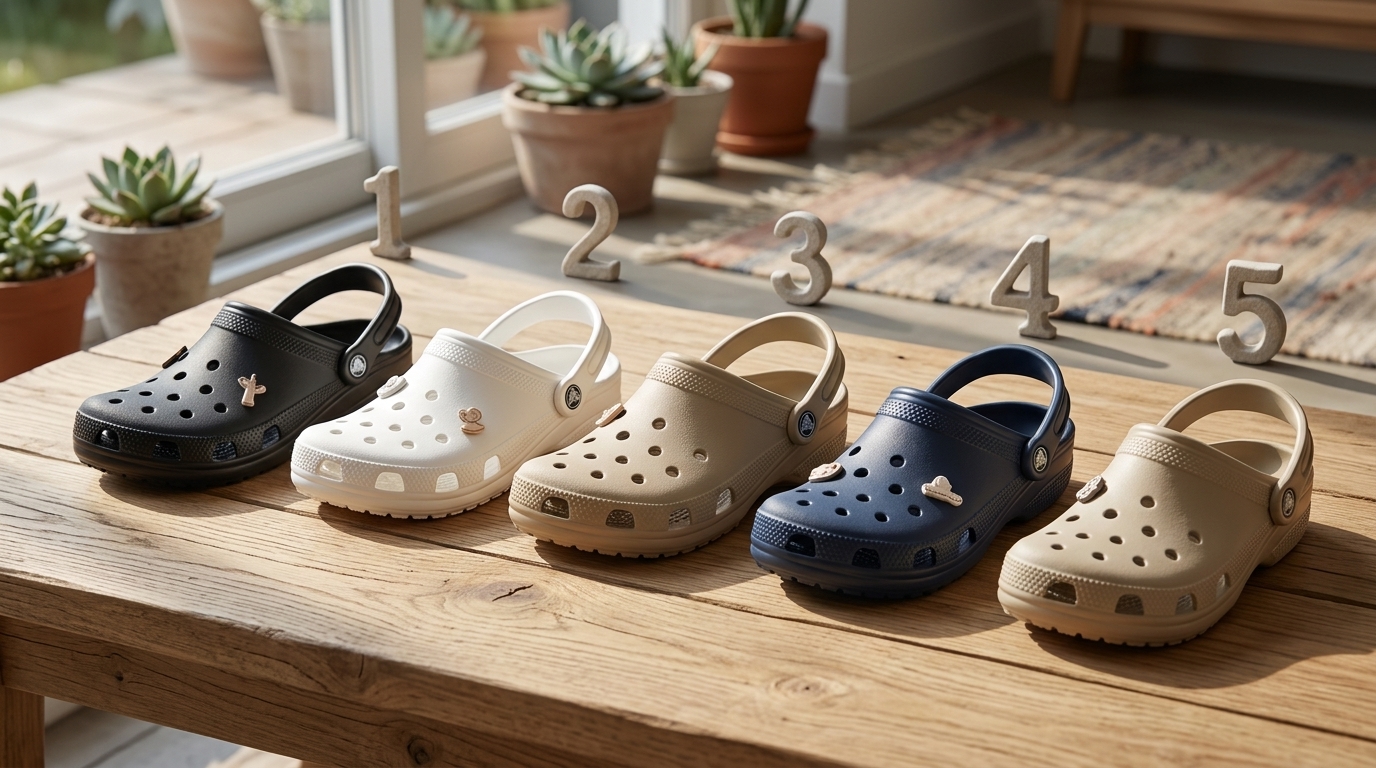
The Classic Clog is the original — Crocs' signature model and the one that's been on shelves longest. It looks like a chunky foam shoe full of holes. And yet review after review lands on the same sentence: once you put them on, you don't want to take them off. This is a shoe that wins on feel, not on looks.
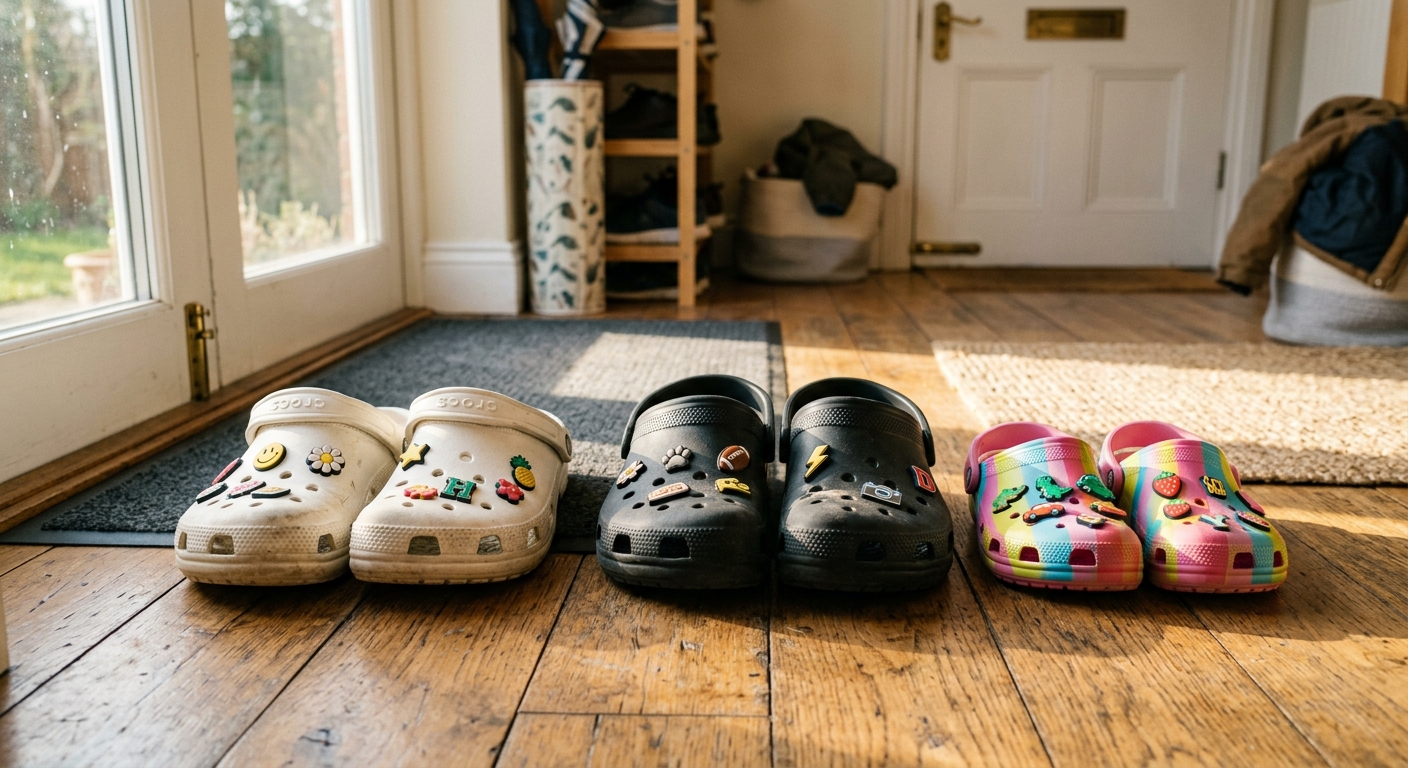
The whole thing runs on Croslite, the proprietary foam Crocs molds the clog from in a single piece. It flexes with the shape of your foot while weighing almost nothing, so your feet don't feel pinched or worn down after hours in them. The vent holes across the top cut way down on that swampy mid-July feeling. And those same holes are what let you clip in Jibbitz charms, which is half the fun for a lot of people.
Sizing is unisex, and you'll see plenty of couples and families buying matching pairs in different colors. Flip the heel strap back and they wear like a slide; pull it onto your heel and they lock down for anything more active. Two shoes in one pair. There's a reason these have stuck around for 20-plus years.
2. The Specs, in One Table
Explaining all of this in paragraphs gets long, so here are the key details up front — the stuff you actually check while you're deciding.
| Item | Details |
|---|---|
| Model | Crocs Classic Clog, style 10001 (color code 100 = White) |
| Material | Croslite foam, single-piece molded construction |
| Weight | Extremely light — 'so light' is the single most repeated phrase in reviews |
| Venting & drainage | Vent holes across the top plus side and bottom drainage ports |
| How you wear them | Strap back = slide mode, strap on the heel = sport mode (2-way) |
| Care | Rinse with water, air dries fast |
| Sizing | Whole sizes only (no half sizes), roomy through the forefoot; unisex M/W numbering |
| Price | $49.99 MSRP; frequently $35–$45 on sale (as of July 2026) |
Even the table tells you what kind of shoe this is. It's built around being light, waterproof, and easy to clean. A precision fit and aggressive traction were never the goal. Buy it knowing that, and there's very little to be disappointed about.
3. Three Things Reviewers Consistently Praise
Read enough reviews and the praise gets weirdly repetitive. Here are the three points almost everyone lands on, and why.
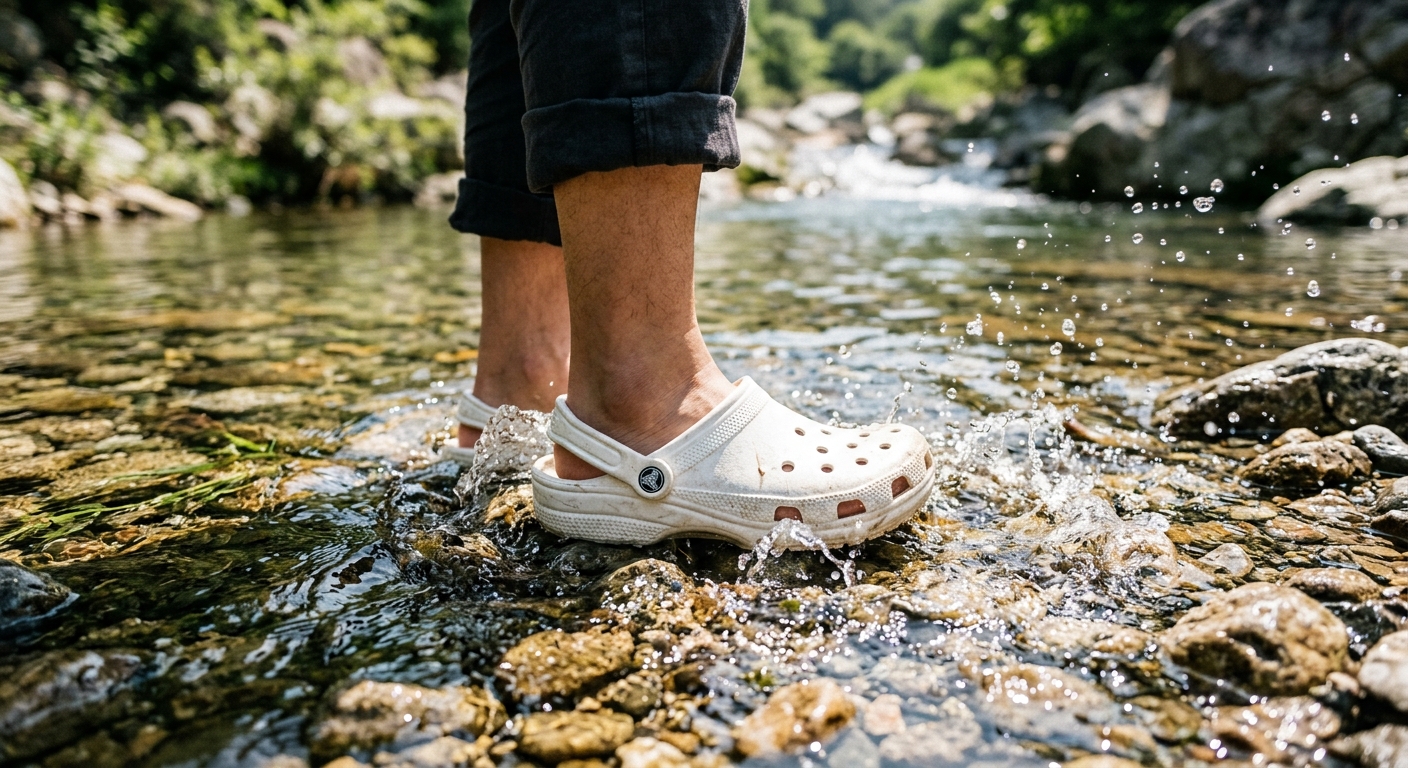
First, they're unbeatable around water. Creek walks, water parks, a rainy walk to the train — situations where getting wet is a given. The reaction is almost always some version of 'I don't have to think about it.' Water drains straight out the side and bottom ports and the foam dries fast, so you skip that squelching, waterlogged-sock misery entirely.
Second, care is effortless. Mud, lake water, sand at the beach — rinse them off, shake them out, done. None of the stain, odor, and drying drama that comes with canvas or mesh sneakers. That's why satisfaction runs especially high with parents at the splash pad and with people who use them for gardening or camping.
Third, people wear them all day without complaint. The low weight and flexible sole handle dog walks, yard work, and short strolls just fine. The recurring review arc — 'I judged them for years, wore a pair once, now I own two' — really does come down to that comfort.
4. The Honest Downsides
There's a flip side to all that comfort. Knowing about these in advance is what turns them from dealbreakers into things you just plan around.
The biggest source of confusion is sizing. There are no half sizes and the fit is deliberately roomy, which throws people who normally buy a half size. Reviews are full of 'runs big' and 'kind of sloppy.' That's not a defect — that's the intended fit. Two extra wrinkles in the US: the same shoe is listed with both a men's and a women's number (M8/W10, for example), and the strap position changes the fit meaningfully. I broke down how to choose in the FAQ below.
Second, traction and protection have real limits. The outsole pattern isn't especially grippy, so wet tile and smooth ramps can get slick. The open top means nothing is protecting your foot from a dropped can or something sharp. Hiking, job sites, and fast long-distance walking all come up as bad fits in reviews — and plenty of hospitals and restaurant kitchens specifically require the closed Bistro version instead of these for exactly that reason.
Third, wearing them barefoot for long stretches can produce that distinctive foam-shoe funk, and small pebbles and sand find their way in through the vents. Slips on wet indoor floors show up in reviews too. Keep the job description to 'daily wear, water, short distances' and they hold up beautifully.
5. Should You Get a Pair?
Like any shoe, this one isn't universal. Pull the reviews together and the split between who loves them and who returns them is pretty clean.
- Good fit — you want one pair that handles summer daily wear and water days both
- Good fit — you need a shoe you can get soaked and filthy without a second thought
- Good fit — you and your partner or kids want matching pairs in different colors
- Good fit — you want something light and easy to slip on for in-and-out-of-the-house days
- Poor fit — a snug, dialed-in fit and a sleek look matter to you
- Poor fit — slip resistance and foot protection are the priority for work or training
- Poor fit — you want them for long-distance walking, hiking, or anything that works your feet hard for hours
6. Is $50 Worth It?
As of July 2026 the Classic Clog runs $49.99 at MSRP, and it drops to roughly $35–$45 during sales at Crocs, Amazon, DSW, and the usual suspects. For a shoe you mostly wear a few months a year, that's not pocket change.
Run the math, though, and it looks different. Buy dedicated water shoes, a pair of rain slides, and something for quick trips outside, and you've spent well past $50 on three shoes. The Classic Clog covers all three jobs. Add in how many people report wearing the same pair for years, and it stops being a seasonal purchase and starts being a multi-year utility shoe.
There are cheaper foam clog dupes at Walmart, Target, and all over Amazon. But once you factor in Jibbitz compatibility, the resale value on Poshmark or Facebook Marketplace, and the sheer volume of feedback behind the original, the real thing still wins on versatility. And if a closed toe feels like too much shoe, the Crocs Classic Slide is a reasonable alternative. If your goal is simply 'one comfortable pair I'm allowed to get wet,' the odds of regret here are low.
Frequently Asked Questions
Should I buy my normal size or size up?
This is the question everyone gets stuck on, and the answer depends on one thing. If you plan to wear the strap on your heel in sport mode, buy your normal size (round up if you usually wear a half size). If you want them loose and slide-like, go up one. One US-specific note: listings show both a men's and a women's number for the same clog, so buy by the number that matches your usual sizing, not whichever is smaller. When you're truly torn, most people end up happier with the bigger of the two.
I have wide feet. Will these work?
Probably better than most shoes, actually. The forefoot is designed roomy, and wide-footed reviewers are some of the happiest people in the comments. The reverse is the problem: narrow feet can swim in them, in which case wear the strap on your heel to lock things down.
Does the white pair (10001-100) show dirt?
Yes, dust and mud are visible on a light color, no way around it. But because of what the foam is, a rinse and a scrub takes most of it right off. A little upkeep and they stay sharp. If dirt is going to bug you, black is the low-stress choice.
Can I wear them in winter?
All those vents mean cold air goes straight to your feet, so they're chilly. Some people wear thick socks and demote them to indoor shoes, but treat these as a spring-through-early-fall shoe. Crocs makes a fuzz-lined version if you want a genuine cold-weather option.
What about odor and slipping if I go barefoot?
Long barefoot stretches can build up sweat and smell, and an occasional wash handles it completely. And go carefully on wet floors indoors — the foam can get slick.
One Decision Before You Hit Buy
The Classic Clog isn't a perfect shoe; it's a shoe with a very clear job. If your goal is something you can soak, rinse, and slip on without thinking, $50 doesn't feel steep at all.
Just settle one question before you order: strap on the heel, or flipped back like a slide? That single decision cuts your odds of a sizing mistake dramatically. Honestly, half the complaints about this shoe never would have happened if people had answered it first.
Summer is short, and a day spent in soggy shoes feels a whole lot longer than it is. Make this the year you head for the water without thinking about your feet at all.