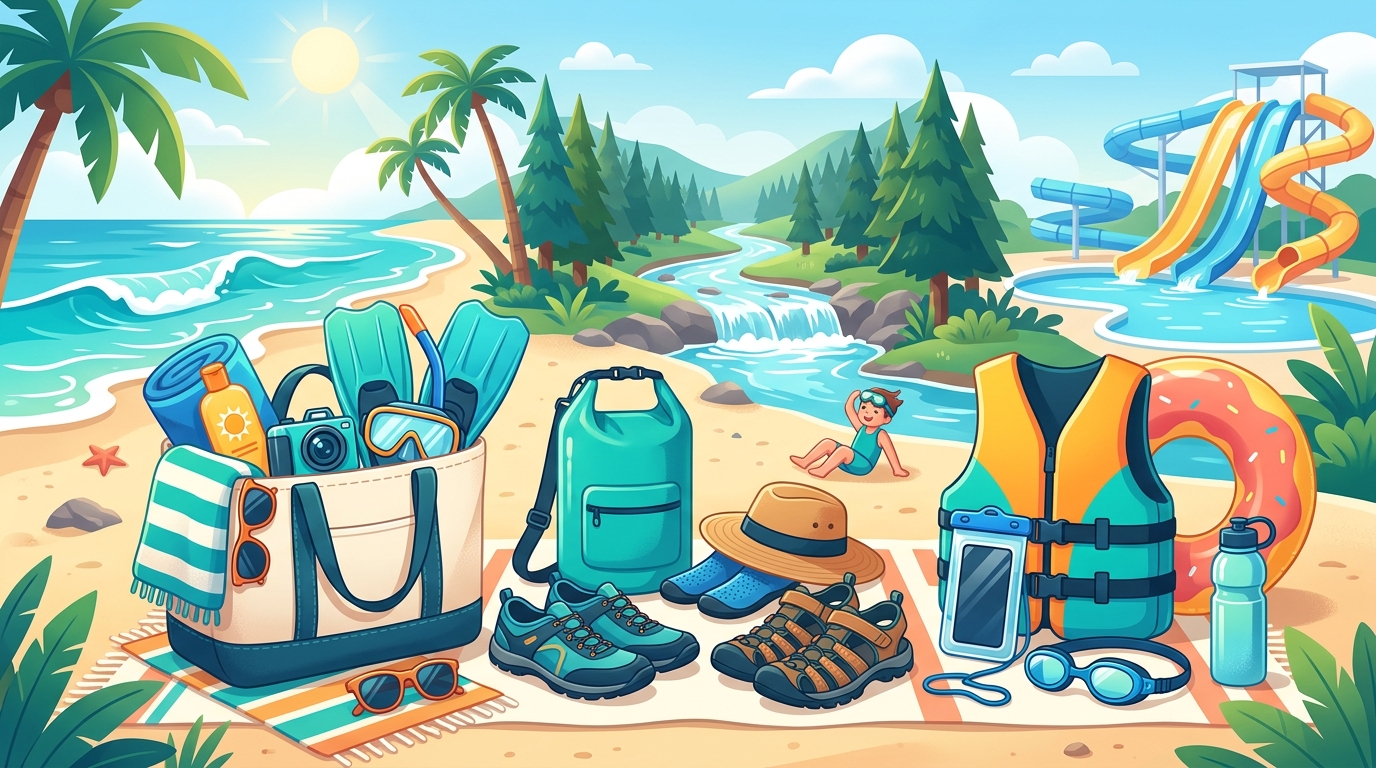
You can zip the bag shut, feel great about it, and still figure out something's missing the second you hit the sand. Sunscreen made it in — a way to reapply it did not. Or you find out the hard way that river rocks are slick as glass, tough it out in flip-flops, and stub a toe on granite. After enough summers, I've learned that packing for a water day isn't about volume. It's about matching the bag to the place you're actually going.
A beach, a river swimming hole, and a water park are three completely different environments. Different gear, different hazards. So this list is broken out by destination, with only what each one really calls for. I've also added the stuff that slips through every single time, plus a few tricks that cut my load roughly in half. Skim this the night before and you're covered.
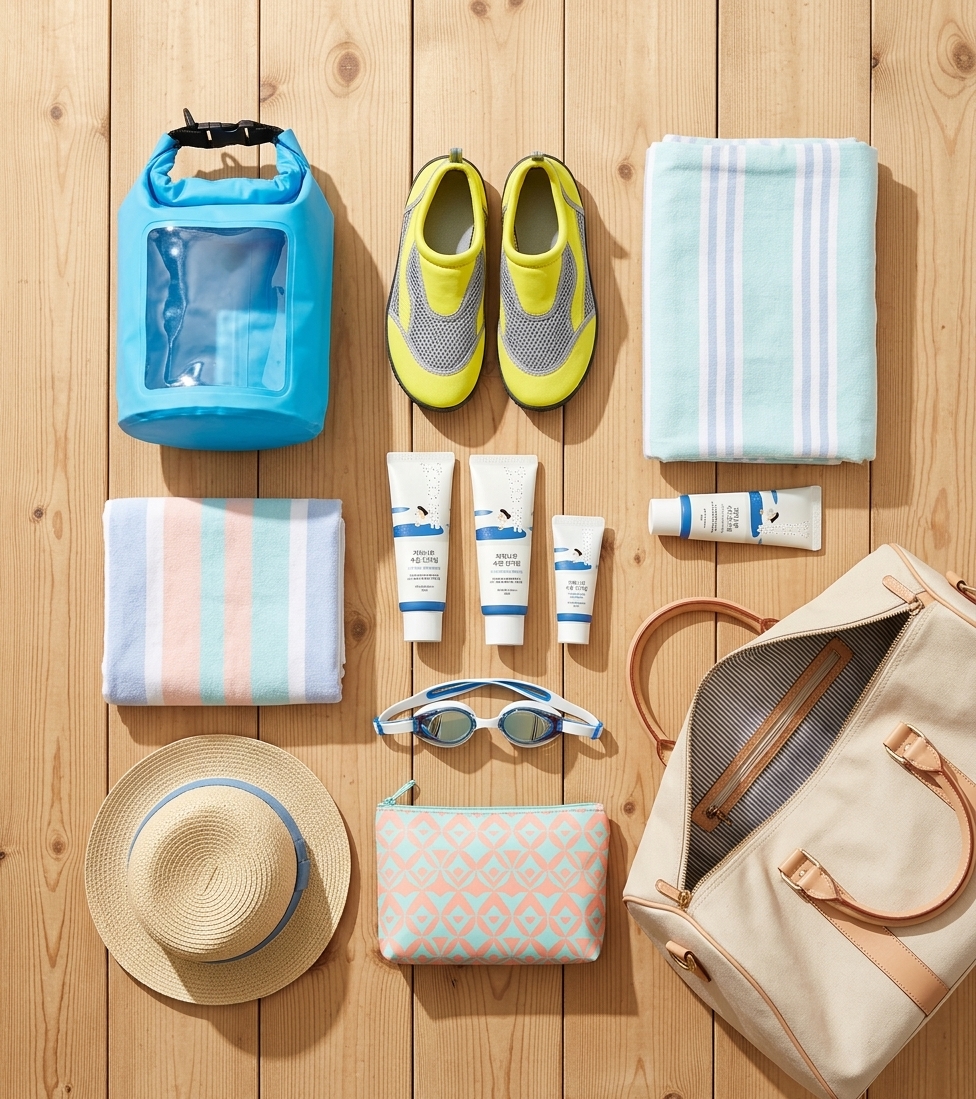
The Basics: What Goes in the Bag No Matter Where You're Headed
Some things earn a permanent spot in the bag. Beach, river, water park — doesn't matter, they go in. And sunscreen, a dry change of clothes, and a waterproof pouch aren't just nice-to-haves. Skip any one of them and you're looking at a genuinely miserable afternoon.
Sunscreen: one high-SPF bottle (SPF 30 or higher), plus a stick or spray dedicated to reapplying
Dry clothes and underwear: the ride home in a wet swimsuit is colder than you'd think, especially with the AC on
Waterproof phone pouch or dry bag: somewhere safe for your phone, cards, and car key fob
Beach towel or a quick-dry travel towel: fast-drying fabric takes up a fraction of the space
A handful of gallon zip-top bags: unbeatable for quarantining wet suits and soggy shoes
Small first aid kit: bandages, antiseptic wipes, antibiotic ointment, ibuprofen
Charger and a power bank: a day of photos outdoors drains a phone shockingly fast
Add water, snacks, and a trash bag and you've got the baseline for any water day in the country. Everything else gets added or dropped based on where you're going — and that's where it gets interesting.
Beach vs. River vs. Water Park vs. Going with Kids
"Swimming" covers a lot of ground. Salt water and hot sand at the beach. Slick moss and loose rock at a river or creek. Miles of walking and standing in line at a water park. Bring kids along and there's a whole extra layer on top of all of it. Here's how they stack up.
Where | Don't Leave Without | Watch Out For |
|---|---|---|
Beach | Water shoes, float or life jacket, a sand-shedding mat or blanket, beach umbrella or pop-up shade, more water than you think you need | Salt and sand destroy electronics; UV bouncing off the water burns you twice |
River / swimming hole | Grippy-soled water shoes, closed-toe water sandals, a long-sleeve rash guard, bug spray, spare socks | Algae-slick rocks, cold water, sudden drop-offs, current, mosquitoes and biting flies |
Water park | Waterproof pouch, quarters or a card for lockers, flip-flops, waterproof watch, tube for the lazy river (if rentals sell out), easy snacks | All-day walking and queuing, lost or stolen belongings, heavy sun exposure |
With kids | Properly fitted kids' life jacket, toddler rash guard, kid-safe mineral sunscreen, swim diapers, extra changes of clothes, snacks | Getting chilled fast, swallowing water, the five seconds you look away |
Notice how water shoes show up for both the beach and the river — that's how useful they are for the money. And if you've got kids with you, life jacket fit matters more than anything else on the list. A jacket that's too big rides up over a child's head in the water, which defeats the whole purpose. Buy for their actual weight range, and look for a Coast Guard–approved label.
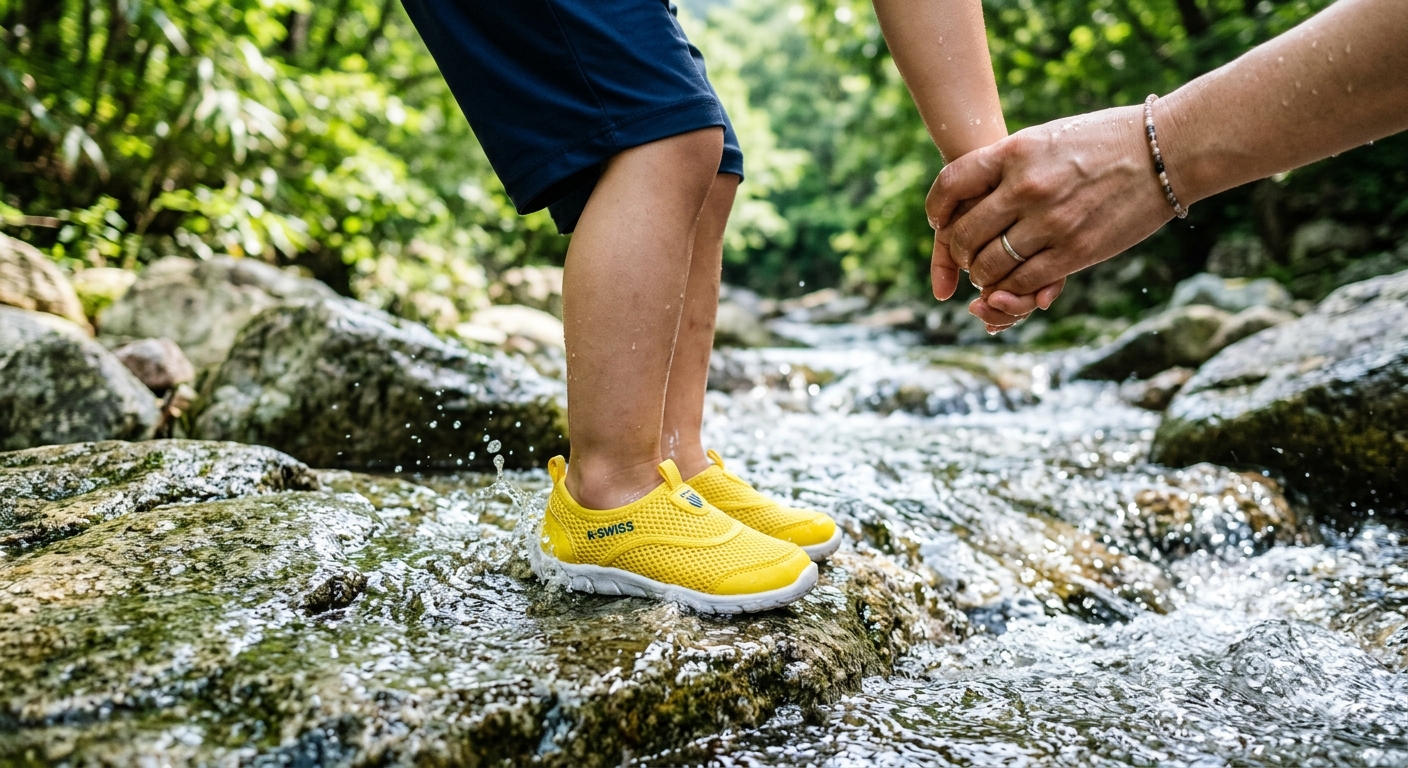
The Things Everyone Forgets — and They Make or Break the Day
No matter how carefully you build the list, a few items always fall off. Usually because they read as optional. Then you get there, and they're exactly what you wish you had. These three top the regret list.
A Separate Sunscreen Just for Reapplying
Whatever you put on at 9 a.m. is mostly gone two or three hours later once you've been swimming and sweating. Reapplication is the part that actually protects you — but nobody wants to wrestle a tube of lotion with wet, sandy hands, so it gets skipped. Toss in a stick or a spray and you can top off without getting it all over your palms. That one small swap is the difference between meaning to reapply and actually doing it.
A Waterproof Pouch and a Pair of Water Shoes
A waterproof pouch means you can keep your phone with you at the water's edge instead of leaving it in a pile on a towel. More importantly, you stop worrying about a wave or the current taking your stuff. Get the style with a neck lanyard and your hands stay free in the wave pool or the lazy river. Water shoes, meanwhile, handle scorching sand, sharp shells, broken glass, and mossy rock. Far safer and honestly more comfortable than trying to make flip-flops work.
A Wet Bag and Your Own Drinking Water
Drop a soaked swimsuit and wet shoes straight into your tote and everything else in there comes home damp and musty. A couple of large zip-top bags or a dedicated wet/dry bag solves it completely. As for water: park and boardwalk concessions charge a small fortune for a bottle. Freeze a couple of bottles the night before and they pull double duty — ice packs on the way in, cold water by mid-afternoon.
How to Pack Lighter and Still Enjoy the Day More
Packing has a way of spiraling. One more thing, then one more thing, and suddenly the trunk is full. But a heavy load makes the walk from the parking lot brutal and gives you that much more to lose track of. The fix is to favor gear that does more than one job — and to leave behind anything you can buy or rent when you get there.
Choose multitaskers: a rash guard is sun protection and a warm layer in one, and one oversized beach towel doubles as a blanket to sit on
Go quick-dry: swapping thick bath towels for absorbent quick-dry ones cuts the bulk roughly in half
Decant it: move sunscreen and toiletries into small travel bottles instead of hauling full-size ones
Buy it there: water, snacks, and air for the floats are almost always available on site
Zone your bag: separate dry stuff from soon-to-be-wet stuff from the start and packing up to leave takes two minutes
Renting is the single biggest space saver. Tubes and lockers at water parks, umbrellas and chair setups at the beach — renting on site usually beats lugging your own across a parking lot in the heat. Decide once what you own and what you rent, write it down, and every summer after this one gets noticeably lighter.
Before You Head Out, Run Through This List
It all comes down to three layers. The universals that go every time (sunscreen, dry clothes, waterproof pouch). The destination-specific picks — water shoes and shade for the beach, traction and bug spray for the river, a pouch and locker money for the water park, a properly fitted life jacket for kids. And the perennial blind spots: reapplication sunscreen and a way to isolate wet gear. Nail those three and it's hard to have a bad day at the water.
Screenshot this checklist, or better yet, use the comparison table above to do a dry run — pack the bag for wherever your family is actually headed this weekend. The gaps jump right out at you. Start with the high-mileage items like water shoes, a waterproof pouch, and a stick sunscreen, since those carry you through this summer and every one after it. Packing light is what makes the day fun in the first place.
Do I really need water shoes?
At the beach or a river, yes — I'd push hard for them. They protect your feet from blistering sand, sharp shells, broken glass, and slippery algae, which takes the injury risk way down. At a water park the decks are smooth and maintained, so flip-flops are usually fine. If slipping worries you, though, water shoes are the safer call.
How often should I reapply sunscreen?
Every two hours, and immediately after swimming or heavy sweating. Even water-resistant formulas come off when you towel down, so getting out and drying off should be your cue to reapply. Keeping a stick or spray on hand makes it fast enough that you'll actually keep up with it.
For a child, is a life jacket or a float better?
A life jacket, without question. Floats and inner tubes flip, and small hands slip off them. A properly fitted, Coast Guard–approved life jacket keeps a child buoyant no matter what position they end up in. Match it to their weight, and make sure you buckle the chest strap and crotch strap every time.